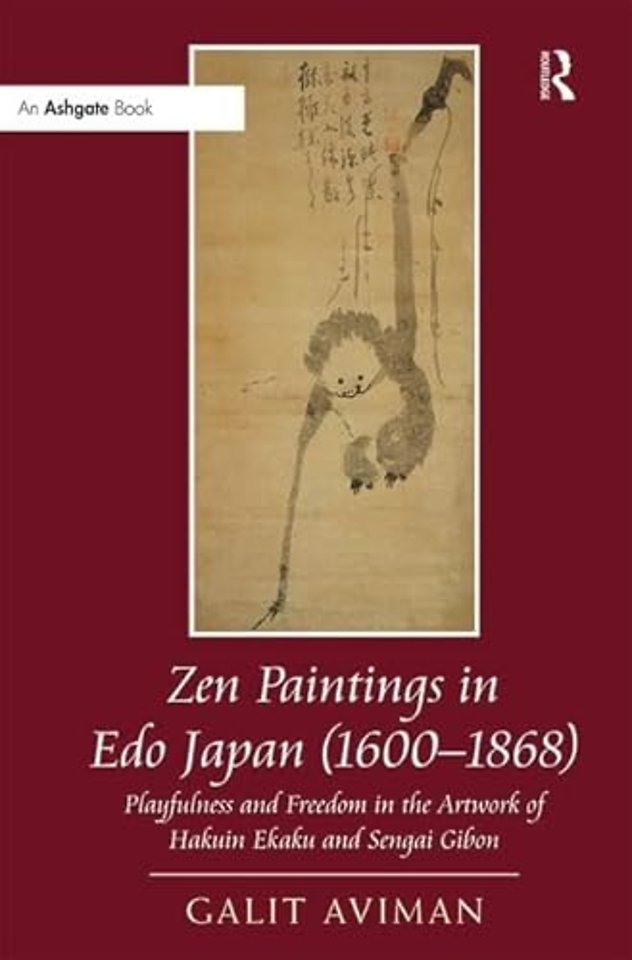
Zen Paintings in Edo Japan (1600-1868)
Playfulness and Freedom in the Artwork of Hakuin Ekaku and Sengai Gibon
Samenvatting
In Zen Buddhism, the concept of freedom is of profound importance. And yet, until now there has been no in-depth study of the manifestation of this liberated attitude in the lives and artwork of Edo period Zen monk-painters. This book explores the playfulness and free-spirited attitude reflected in the artwork of two prominent Japanese Zen monk-painters: Hakuin Ekaku (1685-1768) and Sengai Gibon (1750-1837). The free attitude emanating from their paintings is one of the qualities which distinguish Edo period Zen paintings from those of earlier periods. These paintings are part of a Zen ink painting tradition that began following the importation of Zen Buddhism from China at the beginning of the Kamakura period (1185-1333). In this study, Aviman elaborates on the nature of this particular artistic expression and identifies its sources, focusing on the lives of the monk-painters and their artwork. The author applies a multifaceted approach, combining a holistic analysis of the paintings, i.e. as interrelated combination of text and image, with a contextualization of the works within the specific historical, art historical, cultural, social and political environments in which they were created.
Specificaties
Net verschenen
Rubrieken
- aanbestedingsrecht
- aansprakelijkheids- en verzekeringsrecht
- accountancy
- algemeen juridisch
- arbeidsrecht
- bank- en effectenrecht
- bestuursrecht
- bouwrecht
- burgerlijk recht en procesrecht
- europees-internationaal recht
- fiscaal recht
- gezondheidsrecht
- insolventierecht
- intellectuele eigendom en ict-recht
- management
- mens en maatschappij
- milieu- en omgevingsrecht
- notarieel recht
- ondernemingsrecht
- pensioenrecht
- personen- en familierecht
- sociale zekerheidsrecht
- staatsrecht
- strafrecht en criminologie
- vastgoed- en huurrecht
- vreemdelingenrecht