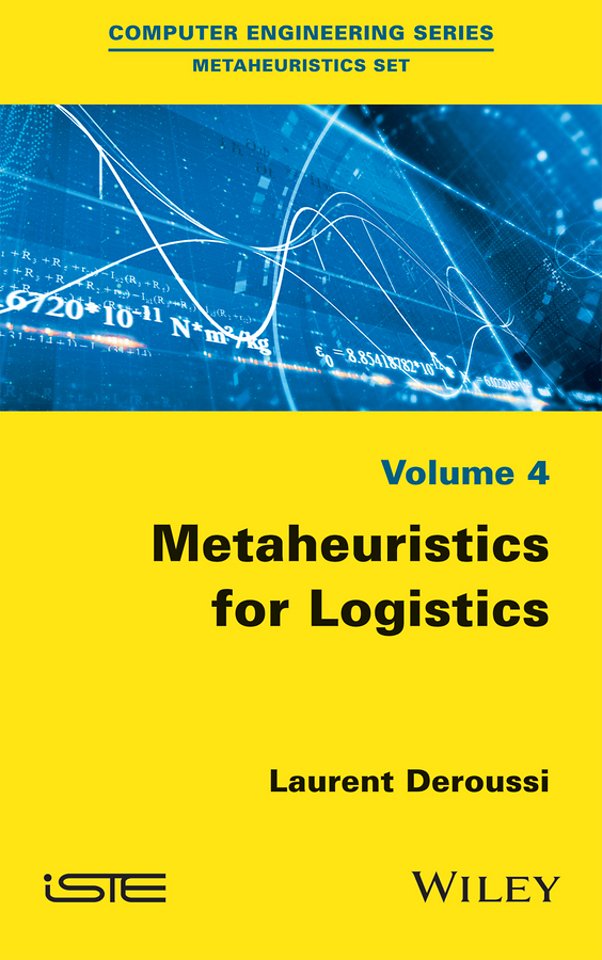
Laurent Deroussi,
L Deroussi
John Wiley & Sons
e druk, 2016
9781848218086
Metaheuristics for Logistics
Specificaties
Gebonden, 222 blz.
|
Engels
John Wiley & Sons |
e druk, 2016
ISBN13: 9781848218086
Rubricering
Juridisch
:
Levertijd ongeveer 9 werkdagen
Gratis verzonden
Specificaties
Inhoudsopgave
Introduction xi
<p>Part 1. Basic Notions 1</p>
<p>Chapter 1. Introductory Problems 3</p>
<p>1.1. The swing states problem 3</p>
<p>1.2. Adel and his camels 5</p>
<p>1.3. Sauron s forges 7</p>
<p>1.3.1. Problem 1: The inspection of the forges 8</p>
<p>1.3.2. Problem 2: The production of the deadly weapon 9</p>
<p>Chapter 2. A Review of Logistic Problems 13</p>
<p>2.1. Some history 13</p>
<p>2.1.1. The Fermat Torricelli point 13</p>
<p>2.1.2. The Monge problem 14</p>
<p>2.1.3. The Seven Bridges of Königsberg and the Icosian Game 15</p>
<p>2.2. Some polynomial problems 16</p>
<p>2.2.1. The assignment problem 16</p>
<p>2.2.2. The transportation problem 17</p>
<p>2.2.3. The Minimum–Cost Spanning Tree problem 19</p>
<p>2.3. Packing problems 20</p>
<p>2.3.1. The knapsack problem 20</p>
<p>2.3.2. The bin packing problem 21</p>
<p>2.4. Routing problems 22</p>
<p>2.4.1. The traveling salesman problem 23</p>
<p>2.4.2. The vehicle routing problem (VRP) 24</p>
<p>2.5. Production scheduling problems 24</p>
<p>2.5.1. The flow–shop scheduling problem (FSSP)26</p>
<p>2.5.2. The job–shop scheduling problem (JSSP) 29</p>
<p>2.6. Lot–sizing problems 31</p>
<p>2.7. Facility location problems 33</p>
<p>2.7.1. The Uncapacitated Plant Location Problem (UPLP) 33</p>
<p>2.7.2. The Dynamic Location Problem (DLP) 35</p>
<p>2.8. Conclusion 36</p>
<p>Chapter 3. An Introduction to Metaheuristics 37</p>
<p>3.1. Optimization problems 37</p>
<p>3.2. Metaheuristics: basic notions 39</p>
<p>3.2.1. Intensification and diversification 40</p>
<p>3.2.2. Neighborhood systems 40</p>
<p>3.3. Individual–based metaheuristics 41</p>
<p>3.3.1. Local search 41</p>
<p>3.3.2. Simulated annealing 44</p>
<p>3.3.3. The kangaroo Algorithm 46</p>
<p>3.3.4. Iterated local search 48</p>
<p>3.3.5. Tabu Search 49</p>
<p>3.4. Population–based metaheuristics 50</p>
<p>3.4.1. Evolutionary algorithms 51</p>
<p>3.4.2. The ant colony algorithm 52</p>
<p>3.4.3. Particle Swarm Optimization 53</p>
<p>3.5. Conclusion 55</p>
<p>Chapter 4. A First Implementation of Metaheuristics 57</p>
<p>4.1. Representing a list of objects 57</p>
<p>4.2. The implementation of a local search 59</p>
<p>4.2.1. The construction of an initial solution 59</p>
<p>4.2.2. Description of basic moves 60</p>
<p>4.2.3. The implementation of stochastic descent (LS) 62</p>
<p>4.3. The implementation of individual–based metaheuristics 64</p>
<p>4.3.1. Simulated annealing (SA) 64</p>
<p>4.3.2. Iterated local search (ILS) 66</p>
<p>4.14. Conclusion 66</p>
<p>Part 2. Advanced Notions 69</p>
<p>Chapter 5. The Traveling Salesman Problem 71</p>
<p>5.1. Representing a solution: the two–level tree structure 71</p>
<p>5.2. Constructing initial solutions 74</p>
<p>5.2.1. A greedy heuristic: nearest neighbor 74</p>
<p>5.2.2. A simplification heuristic: the Christofides algorithm 76</p>
<p>5.3. Neighborhood systems 78</p>
<p>5.3.1. The Lin & Kernighan neighborhood 79</p>
<p>5.3.2. Ejection chain techniques 83</p>
<p>5.4. Some results 86</p>
<p>5.5. Conclusion 88</p>
<p>Chapter 6. The Flow–Shop Problem 89</p>
<p>6.1. Representation and assessment of a solution 89</p>
<p>6.2. Construction of the initial solution 90</p>
<p>6.2.1. Simplification heuristics: CDS 91</p>
<p>6.2.2. A greedy heuristic: NEH 94</p>
<p>6.3. Neighborhood systems 97</p>
<p>6.3.1. Improvement of the insertion movements 98</p>
<p>6.3.2. Variable–depth neighborhood search 101</p>
<p>6.4. Results 107</p>
<p>6.5. Conclusion 107</p>
<p>Chapter 7. Some Elements for Other Logistic Problems 109</p>
<p>7.1. Direct representation versus indirect representation 109</p>
<p>7.2. Conditioning problems 111</p>
<p>7.2.1. The knapsack problem 111</p>
<p>7.2.2. The bin–packing problem 112</p>
<p>7.3. Lot–sizing problems 114</p>
<p>7.4. Localization problems 115</p>
<p>7.5. Conclusion 117</p>
<p>Part 3. Evolutions and Current Trends 119</p>
<p>Chapter 8. Supply Chain Management 121</p>
<p>8.1. Introduction to supply chain management 121</p>
<p>8.2. Horizontal synchronization of the supply chain 122</p>
<p>8.2.1. The beer game 123</p>
<p>8.2.2. The bullwhip effect 125</p>
<p>8.3. Vertical synchronization of a supply chain 126</p>
<p>8.4. An integral approach of the supply chain 127</p>
<p>8.5. Conclusion 129</p>
<p>Chapter 9. Hybridization and Coupling Using Metaheuristics 131</p>
<p>9.1. Metaheuristics for the optimization of the supply chain 131</p>
<p>9.2. Hybridization of optimization methods 133</p>
<p>9.2.1. Classification of hybrid methods 133</p>
<p>9.2.2. Illustration by example 134</p>
<p>9.2.3. Metaheuristic/local search hybridization 135</p>
<p>9.2.4. Metaheuristic hybridization/Exact Methods 135</p>
<p>9.3. Coupling of optimization methods and performance evaluations 138</p>
<p>9.3.1. Double complexity 138</p>
<p>9.3.2. Coupling of optimization method/simulation model 139</p>
<p>9.4. Conclusion 141</p>
<p>Chapter 10. Flexible Manufacturing Systems 143</p>
<p>10.1. Introduction to the FMS challenges 143</p>
<p>10.2. The job–shop problem with transport 145</p>
<p>10.2.1. Definition of the problem 145</p>
<p>10.3. Proposal for a metaheuristic/simulation coupling 148</p>
<p>10.3.1. Representation of a solution 148</p>
<p>10.3.2. Simulation method 149</p>
<p>10.3.3. Optimization method 152</p>
<p>10.3.4. Results 153</p>
<p>10.4. Workshop layout problem 154</p>
<p>10.4.1. Aggregated model and exact resolution 154</p>
<p>10.4.2. Detailed model and approximate solutions 157</p>
<p>10.5. Conclusion 159</p>
<p>Chapter 11. Synchronization Problems Based on Vehicle Routings 161</p>
<p>11.1. Inventory routing problem 162</p>
<p>11.1.1. Presentation of the problem 162</p>
<p>11.1.2. Resolution by metaheuristics 166</p>
<p>11.2. The location–routing problem 167</p>
<p>11.2.1. Definition of the problem 167</p>
<p>11.2.2. Solution with metaheuristics 171</p>
<p>11.3. Conclusion 172</p>
<p>Chapter 12. Solution to Problems 173</p>
<p>12.1. The swing state problem 173</p>
<p>12.2. Adel and his camels 176</p>
<p>12.2.1. First question 176</p>
<p>12.2.2. Second question 177</p>
<p>12.2.3. Third question 180</p>
<p>12.3. The forges of Sauron 180</p>
<p>12.3.1. The inspection of the forges 180</p>
<p>12.3.2. Production of the lethal weapon 183</p>
<p>Conclusion 185</p>
<p>Bibliography 187</p>
<p>Index 197</p>
<p>Part 1. Basic Notions 1</p>
<p>Chapter 1. Introductory Problems 3</p>
<p>1.1. The swing states problem 3</p>
<p>1.2. Adel and his camels 5</p>
<p>1.3. Sauron s forges 7</p>
<p>1.3.1. Problem 1: The inspection of the forges 8</p>
<p>1.3.2. Problem 2: The production of the deadly weapon 9</p>
<p>Chapter 2. A Review of Logistic Problems 13</p>
<p>2.1. Some history 13</p>
<p>2.1.1. The Fermat Torricelli point 13</p>
<p>2.1.2. The Monge problem 14</p>
<p>2.1.3. The Seven Bridges of Königsberg and the Icosian Game 15</p>
<p>2.2. Some polynomial problems 16</p>
<p>2.2.1. The assignment problem 16</p>
<p>2.2.2. The transportation problem 17</p>
<p>2.2.3. The Minimum–Cost Spanning Tree problem 19</p>
<p>2.3. Packing problems 20</p>
<p>2.3.1. The knapsack problem 20</p>
<p>2.3.2. The bin packing problem 21</p>
<p>2.4. Routing problems 22</p>
<p>2.4.1. The traveling salesman problem 23</p>
<p>2.4.2. The vehicle routing problem (VRP) 24</p>
<p>2.5. Production scheduling problems 24</p>
<p>2.5.1. The flow–shop scheduling problem (FSSP)26</p>
<p>2.5.2. The job–shop scheduling problem (JSSP) 29</p>
<p>2.6. Lot–sizing problems 31</p>
<p>2.7. Facility location problems 33</p>
<p>2.7.1. The Uncapacitated Plant Location Problem (UPLP) 33</p>
<p>2.7.2. The Dynamic Location Problem (DLP) 35</p>
<p>2.8. Conclusion 36</p>
<p>Chapter 3. An Introduction to Metaheuristics 37</p>
<p>3.1. Optimization problems 37</p>
<p>3.2. Metaheuristics: basic notions 39</p>
<p>3.2.1. Intensification and diversification 40</p>
<p>3.2.2. Neighborhood systems 40</p>
<p>3.3. Individual–based metaheuristics 41</p>
<p>3.3.1. Local search 41</p>
<p>3.3.2. Simulated annealing 44</p>
<p>3.3.3. The kangaroo Algorithm 46</p>
<p>3.3.4. Iterated local search 48</p>
<p>3.3.5. Tabu Search 49</p>
<p>3.4. Population–based metaheuristics 50</p>
<p>3.4.1. Evolutionary algorithms 51</p>
<p>3.4.2. The ant colony algorithm 52</p>
<p>3.4.3. Particle Swarm Optimization 53</p>
<p>3.5. Conclusion 55</p>
<p>Chapter 4. A First Implementation of Metaheuristics 57</p>
<p>4.1. Representing a list of objects 57</p>
<p>4.2. The implementation of a local search 59</p>
<p>4.2.1. The construction of an initial solution 59</p>
<p>4.2.2. Description of basic moves 60</p>
<p>4.2.3. The implementation of stochastic descent (LS) 62</p>
<p>4.3. The implementation of individual–based metaheuristics 64</p>
<p>4.3.1. Simulated annealing (SA) 64</p>
<p>4.3.2. Iterated local search (ILS) 66</p>
<p>4.14. Conclusion 66</p>
<p>Part 2. Advanced Notions 69</p>
<p>Chapter 5. The Traveling Salesman Problem 71</p>
<p>5.1. Representing a solution: the two–level tree structure 71</p>
<p>5.2. Constructing initial solutions 74</p>
<p>5.2.1. A greedy heuristic: nearest neighbor 74</p>
<p>5.2.2. A simplification heuristic: the Christofides algorithm 76</p>
<p>5.3. Neighborhood systems 78</p>
<p>5.3.1. The Lin & Kernighan neighborhood 79</p>
<p>5.3.2. Ejection chain techniques 83</p>
<p>5.4. Some results 86</p>
<p>5.5. Conclusion 88</p>
<p>Chapter 6. The Flow–Shop Problem 89</p>
<p>6.1. Representation and assessment of a solution 89</p>
<p>6.2. Construction of the initial solution 90</p>
<p>6.2.1. Simplification heuristics: CDS 91</p>
<p>6.2.2. A greedy heuristic: NEH 94</p>
<p>6.3. Neighborhood systems 97</p>
<p>6.3.1. Improvement of the insertion movements 98</p>
<p>6.3.2. Variable–depth neighborhood search 101</p>
<p>6.4. Results 107</p>
<p>6.5. Conclusion 107</p>
<p>Chapter 7. Some Elements for Other Logistic Problems 109</p>
<p>7.1. Direct representation versus indirect representation 109</p>
<p>7.2. Conditioning problems 111</p>
<p>7.2.1. The knapsack problem 111</p>
<p>7.2.2. The bin–packing problem 112</p>
<p>7.3. Lot–sizing problems 114</p>
<p>7.4. Localization problems 115</p>
<p>7.5. Conclusion 117</p>
<p>Part 3. Evolutions and Current Trends 119</p>
<p>Chapter 8. Supply Chain Management 121</p>
<p>8.1. Introduction to supply chain management 121</p>
<p>8.2. Horizontal synchronization of the supply chain 122</p>
<p>8.2.1. The beer game 123</p>
<p>8.2.2. The bullwhip effect 125</p>
<p>8.3. Vertical synchronization of a supply chain 126</p>
<p>8.4. An integral approach of the supply chain 127</p>
<p>8.5. Conclusion 129</p>
<p>Chapter 9. Hybridization and Coupling Using Metaheuristics 131</p>
<p>9.1. Metaheuristics for the optimization of the supply chain 131</p>
<p>9.2. Hybridization of optimization methods 133</p>
<p>9.2.1. Classification of hybrid methods 133</p>
<p>9.2.2. Illustration by example 134</p>
<p>9.2.3. Metaheuristic/local search hybridization 135</p>
<p>9.2.4. Metaheuristic hybridization/Exact Methods 135</p>
<p>9.3. Coupling of optimization methods and performance evaluations 138</p>
<p>9.3.1. Double complexity 138</p>
<p>9.3.2. Coupling of optimization method/simulation model 139</p>
<p>9.4. Conclusion 141</p>
<p>Chapter 10. Flexible Manufacturing Systems 143</p>
<p>10.1. Introduction to the FMS challenges 143</p>
<p>10.2. The job–shop problem with transport 145</p>
<p>10.2.1. Definition of the problem 145</p>
<p>10.3. Proposal for a metaheuristic/simulation coupling 148</p>
<p>10.3.1. Representation of a solution 148</p>
<p>10.3.2. Simulation method 149</p>
<p>10.3.3. Optimization method 152</p>
<p>10.3.4. Results 153</p>
<p>10.4. Workshop layout problem 154</p>
<p>10.4.1. Aggregated model and exact resolution 154</p>
<p>10.4.2. Detailed model and approximate solutions 157</p>
<p>10.5. Conclusion 159</p>
<p>Chapter 11. Synchronization Problems Based on Vehicle Routings 161</p>
<p>11.1. Inventory routing problem 162</p>
<p>11.1.1. Presentation of the problem 162</p>
<p>11.1.2. Resolution by metaheuristics 166</p>
<p>11.2. The location–routing problem 167</p>
<p>11.2.1. Definition of the problem 167</p>
<p>11.2.2. Solution with metaheuristics 171</p>
<p>11.3. Conclusion 172</p>
<p>Chapter 12. Solution to Problems 173</p>
<p>12.1. The swing state problem 173</p>
<p>12.2. Adel and his camels 176</p>
<p>12.2.1. First question 176</p>
<p>12.2.2. Second question 177</p>
<p>12.2.3. Third question 180</p>
<p>12.3. The forges of Sauron 180</p>
<p>12.3.1. The inspection of the forges 180</p>
<p>12.3.2. Production of the lethal weapon 183</p>
<p>Conclusion 185</p>
<p>Bibliography 187</p>
<p>Index 197</p>
Net verschenen
Rubrieken
- aanbestedingsrecht
- aansprakelijkheids- en verzekeringsrecht
- accountancy
- algemeen juridisch
- arbeidsrecht
- bank- en effectenrecht
- bestuursrecht
- bouwrecht
- burgerlijk recht en procesrecht
- europees-internationaal recht
- fiscaal recht
- gezondheidsrecht
- insolventierecht
- intellectuele eigendom en ict-recht
- management
- mens en maatschappij
- milieu- en omgevingsrecht
- notarieel recht
- ondernemingsrecht
- pensioenrecht
- personen- en familierecht
- sociale zekerheidsrecht
- staatsrecht
- strafrecht en criminologie
- vastgoed- en huurrecht
- vreemdelingenrecht