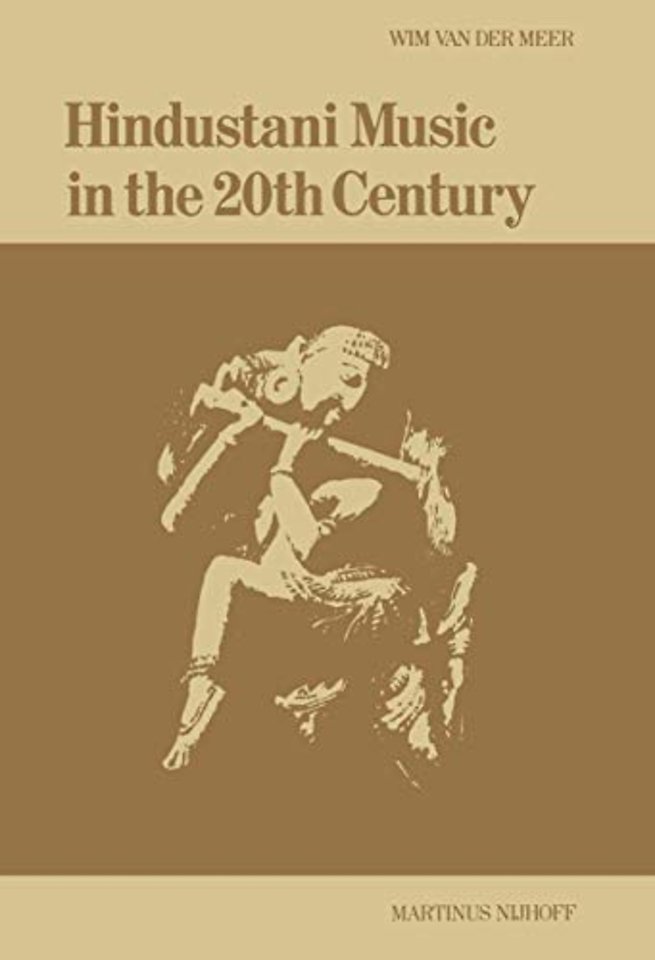
Hindustani Music in the 20th Century
Samenvatting
AIM In spite of a reasonably extensive literature in English' and Indian vernaculars, there are extremely few books on Indian music that can be considered of a scientific standard. I found, when I took up an interest in Indian music in 1967, that even protracted reading of the studies in English was not conducive to an understanding of the principles of performance. Most of my study and research have been devoted to the gradual refinement of this very understanding. In the course of time it also became obvious that different scholars and different musicians held divergent views on many basic concepts of Indian music. Therefore, one of my tasks was to assess the degree of variability in Indian music. As a corollary I wanted to know how this variability could manifest itself as change in a relatively short and well-documented period. It is often assumed that traditional cultures, as e. g. in India, are rather inert and that the art forms hardly ever change. This study proves the contrary: Indian music has a strong vitality. If we examine the different treatises through the centuries this vitality would appear to be a basic characteristic. I felt that at least an effort to discover the roots of such change would be valuable as a contribution to the study of art history and possibly to the sociology of culture.
Specificaties
Inhoudsopgave
Net verschenen
Rubrieken
- aanbestedingsrecht
- aansprakelijkheids- en verzekeringsrecht
- accountancy
- algemeen juridisch
- arbeidsrecht
- bank- en effectenrecht
- bestuursrecht
- bouwrecht
- burgerlijk recht en procesrecht
- europees-internationaal recht
- fiscaal recht
- gezondheidsrecht
- insolventierecht
- intellectuele eigendom en ict-recht
- management
- mens en maatschappij
- milieu- en omgevingsrecht
- notarieel recht
- ondernemingsrecht
- pensioenrecht
- personen- en familierecht
- sociale zekerheidsrecht
- staatsrecht
- strafrecht en criminologie
- vastgoed- en huurrecht
- vreemdelingenrecht