WISC-V Assessment and Interpretation
Scientist-Practitioner Perspectives
Samenvatting
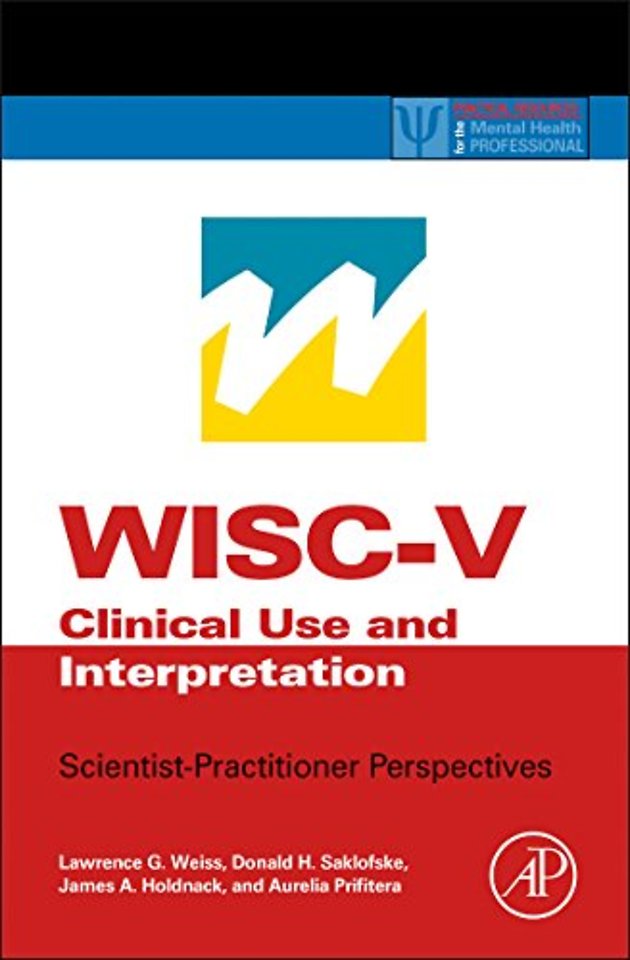
The Wechsler Intelligence Scale is the most widely used intelligence test for children worldwide. WISC-V introduces new subtests, composite scores, process scores, error scores, and scaled scores as a more complex and accurate means of assessing cognitive abilities. WISC-V Assessment and Interpretation provides practical information for clinicians on selection of subtest measures, administration, and interpretation.
New subtests are described along with tips for accurate administration and scoring. Full Scale IQ is identified as important for predicting relevant behaviors, and primary index scores for characterizing the child’s strengths and weaknesses. Classroom indicators of low scores on each of these abilities are identified, with suggested interventions, accommodations, and instructional strategies for low scorers. Coverage includes ethnic differences for the Full Scale IQ and each primary index score, along with evidence of the profound influence of parental attitudes and expectations. Several other societal and contextual factors relevant to understanding racial/ethnic differences are presented. Two chapters review use of the WISC-V for identifying learning disabilities, testing of individuals with dyslexia, and best-practice recommendations to ensure accurate diagnosis and intervention. Concluding chapters describe advances in the Q-interactive system platform allowing administration of the WISC-V on iPads and other tablets and how clinicians can tailor assessment using select WISC-V subtests and features.
Specificaties
Inhoudsopgave
Net verschenen
Rubrieken
- aanbestedingsrecht
- aansprakelijkheids- en verzekeringsrecht
- accountancy
- algemeen juridisch
- arbeidsrecht
- bank- en effectenrecht
- bestuursrecht
- bouwrecht
- burgerlijk recht en procesrecht
- europees-internationaal recht
- fiscaal recht
- gezondheidsrecht
- insolventierecht
- intellectuele eigendom en ict-recht
- management
- mens en maatschappij
- milieu- en omgevingsrecht
- notarieel recht
- ondernemingsrecht
- pensioenrecht
- personen- en familierecht
- sociale zekerheidsrecht
- staatsrecht
- strafrecht en criminologie
- vastgoed- en huurrecht
- vreemdelingenrecht