Religious Secularity
A Theological Challenge to the Islamic State
Samenvatting
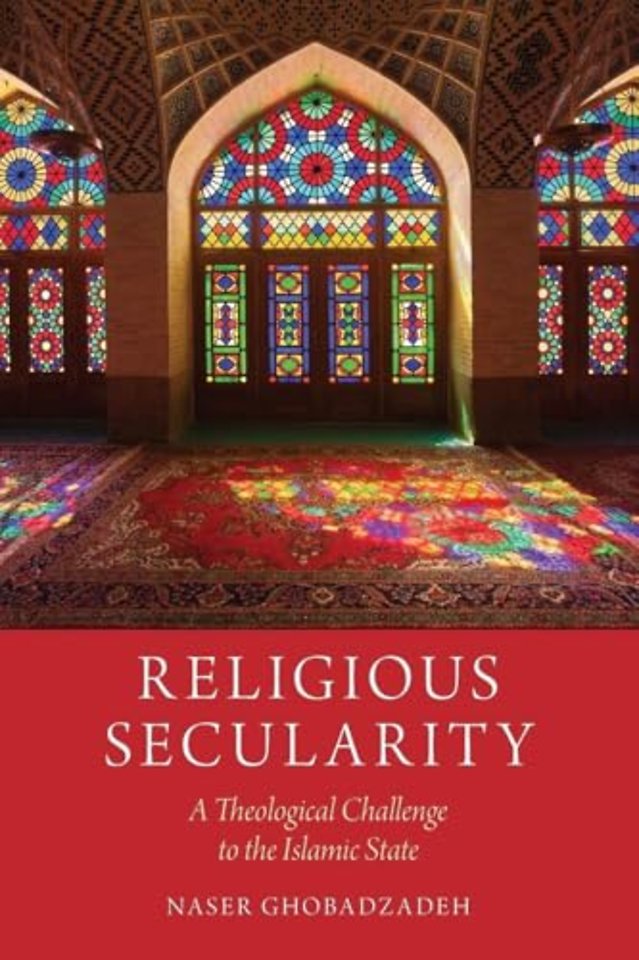
Renewed authoritarianism, national disintegration, sectarian violence, and the increasing radicalization of Jihadi-Salafism since the Arab uprisings have significantly blurred visions for constructive religion-state-society relations in the MENA region. The dissolution of the 'Arab Spring' seems to have revived the questionable notion of Islamic exceptionalism. In sharp contrast, this book seeks to invalidate the supposed incompatibility of Islam and secular democracy. It outlines a complex Islamic political theology that undermines the religious basis of the unification of religion and state, offering religious justification for their separation.
Naser Ghobadzadeh coins the seemingly oxymoronic notion 'religious secularity' to encapsulate the Islamic quest to emancipate religion from state. In simultaneous opposition to both the politicisation of Islam and authoritarian secularism, religious secularity employs Islamic sources such as the Quran and Hadiths to articulate a robust religious rationale for state secularism. Whereas mainstream literature frequently presents being secular as 'antithetical to being religious', religious secularity blurs the boundaries between the 'religious' and the 'secular'. This book suggests that the rift between the religious and the secular is no more pronounced than the relationship between the two understood in dualistic terms, as evinced by Islamic history. Thus, religious secularity supports a theoretical shift away from the religious-secular dichotomy.
Specificaties
Net verschenen
Rubrieken
- aanbestedingsrecht
- aansprakelijkheids- en verzekeringsrecht
- accountancy
- algemeen juridisch
- arbeidsrecht
- bank- en effectenrecht
- bestuursrecht
- bouwrecht
- burgerlijk recht en procesrecht
- europees-internationaal recht
- fiscaal recht
- gezondheidsrecht
- insolventierecht
- intellectuele eigendom en ict-recht
- management
- mens en maatschappij
- milieu- en omgevingsrecht
- notarieel recht
- ondernemingsrecht
- pensioenrecht
- personen- en familierecht
- sociale zekerheidsrecht
- staatsrecht
- strafrecht en criminologie
- vastgoed- en huurrecht
- vreemdelingenrecht