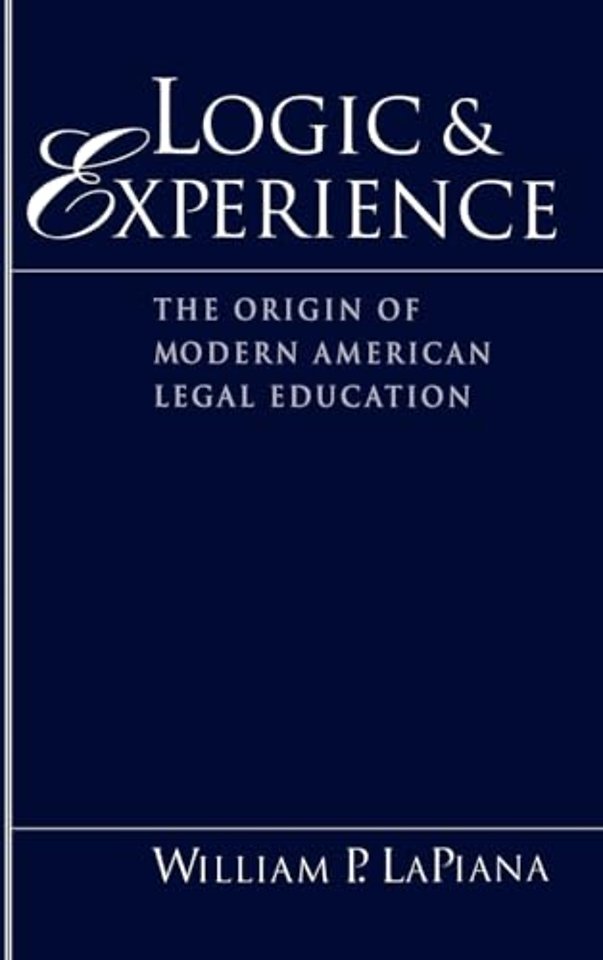
Logic and Experience
The Origin of Modern American Legal Education
Samenvatting
The 19th century saw dramatic changes in the legal education system in the United States. Before the Civil War, lawyers learned their trade primarily through apprenticeship and self-directed study. By the end of the 19th century, the modern legal education system which was developed primarily by Dean Christopher Langdell at Harvard was in place: a bachelor's degree was required for admission to the new model law school, and a law degree was promoted as the best preparation for admission to the bar. William P. LaPiana provides an in-depth study of the intellectual history of the transformation of American legal education during this period. In the process, he offers a revisionist portrait of Langdell, the Dean of Harvard Law School from 1870 to 1900, and the earliest proponent for the modern method of legal education, as well as portraying for the first time the opposition to the changes at Harvard.
Specificaties
Net verschenen
Rubrieken
- aanbestedingsrecht
- aansprakelijkheids- en verzekeringsrecht
- accountancy
- algemeen juridisch
- arbeidsrecht
- bank- en effectenrecht
- bestuursrecht
- bouwrecht
- burgerlijk recht en procesrecht
- europees-internationaal recht
- fiscaal recht
- gezondheidsrecht
- insolventierecht
- intellectuele eigendom en ict-recht
- management
- mens en maatschappij
- milieu- en omgevingsrecht
- notarieel recht
- ondernemingsrecht
- pensioenrecht
- personen- en familierecht
- sociale zekerheidsrecht
- staatsrecht
- strafrecht en criminologie
- vastgoed- en huurrecht
- vreemdelingenrecht