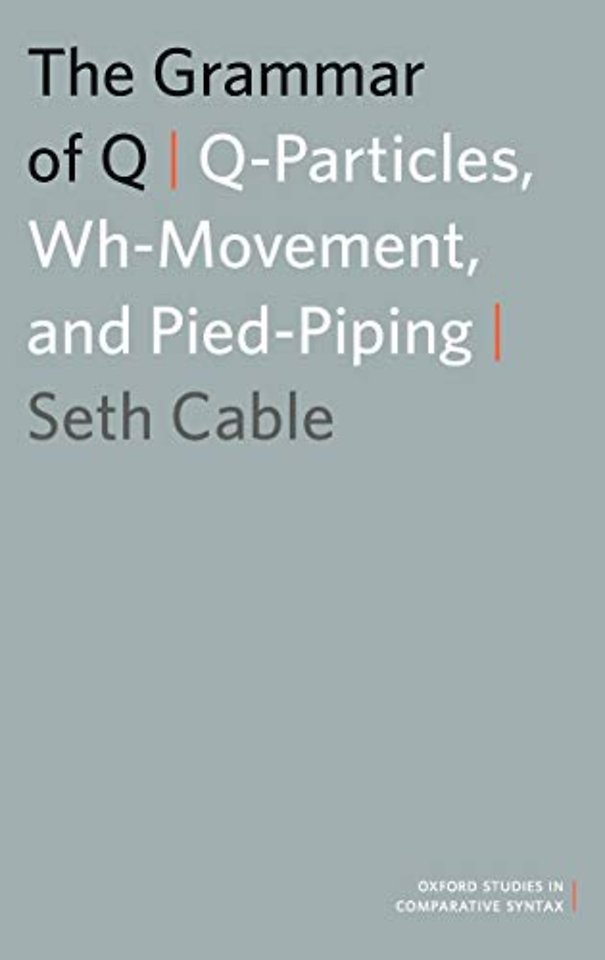
The Grammar of Q
Q-Particles, Wh-Movement, and Pied-Piping
Samenvatting
The Grammar of Q puts forth a novel syntactic and semantic analysis of wh-questions, one that is based upon in-depth study of the Tlingit language, an endangered and under-documented language of North America. A major consequence of this new approach is that the phenomenon classically dubbed "pied-piping" does not actually exist.
Cable begins by arguing that wh-fronting in Tlingit does not involve a syntactic relationship between interrogative C and the wh-word. Rather, it involves a probe/Agree relation between C and an overt 'Q-particle' (or 'Q') c-commanding the wh-word. Fronting of the wh-word in Tlingit is a mere by-product of fronting the QP projected by this Q. From this core observation, he develops a syntax and semantics for Tlingit wh-questions.
Given the strong similarity between the wh-constructions of Tlingit and those of more widely studied languages, Cable applies his analysis to a range of other languages and finds that such a 'Q-based' theory holds a number of interesting consequences in syntax and semantics.
Specificaties
Net verschenen
Rubrieken
- aanbestedingsrecht
- aansprakelijkheids- en verzekeringsrecht
- accountancy
- algemeen juridisch
- arbeidsrecht
- bank- en effectenrecht
- bestuursrecht
- bouwrecht
- burgerlijk recht en procesrecht
- europees-internationaal recht
- fiscaal recht
- gezondheidsrecht
- insolventierecht
- intellectuele eigendom en ict-recht
- management
- mens en maatschappij
- milieu- en omgevingsrecht
- notarieel recht
- ondernemingsrecht
- pensioenrecht
- personen- en familierecht
- sociale zekerheidsrecht
- staatsrecht
- strafrecht en criminologie
- vastgoed- en huurrecht
- vreemdelingenrecht