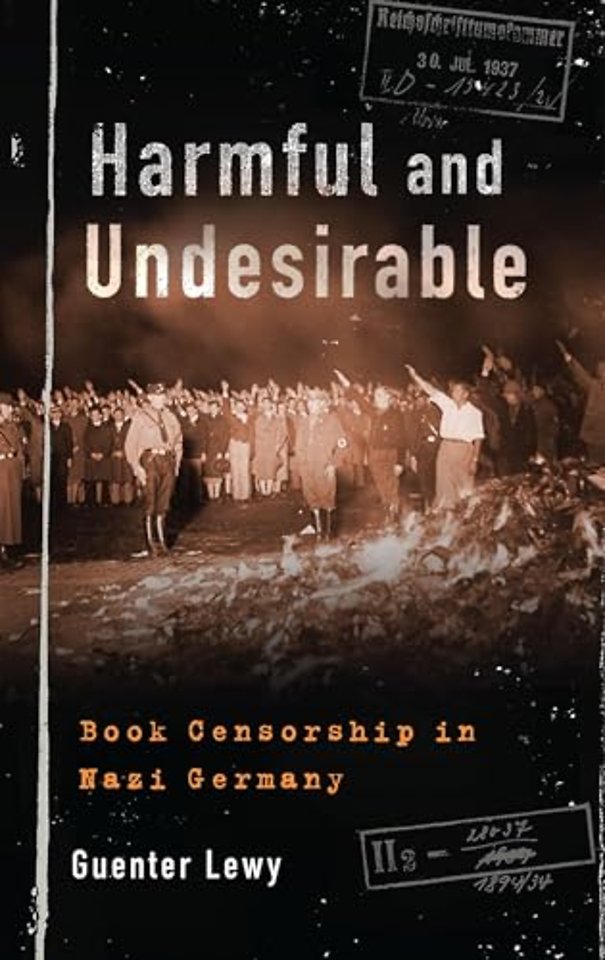
Harmful and Undesirable
Book Censorship in Nazi Germany
Samenvatting
Like every totalitarian regime, Nazi Germany tried to control intellectual freedom through book censorship.
Between 1933 and 1945, the Hitler regime orchestrated a massive campaign to take control of all forms of communication. In 1933 alone, there were 90 book burnings across 70 German cities, declared by a Ministry of Propaganda official to be “a symbol of the revolution.” In later years, the regime used less violent means of domination, pillaging bookstores and libraries, in addition to prosecuting uncooperative publishers and dissident authors. Guenter Lewy deftly analyzes the various strategies that the Nazis employed to enact censorship and the government officials who led the attack on a free intellectual life. Harmful and Undesirable paints a fascinating portrait of intellectual life under Nazi dictatorship, detailing the dismal fate of those who were caught in the wheels of censorship.
Specificaties
Net verschenen
Rubrieken
- aanbestedingsrecht
- aansprakelijkheids- en verzekeringsrecht
- accountancy
- algemeen juridisch
- arbeidsrecht
- bank- en effectenrecht
- bestuursrecht
- bouwrecht
- burgerlijk recht en procesrecht
- europees-internationaal recht
- fiscaal recht
- gezondheidsrecht
- insolventierecht
- intellectuele eigendom en ict-recht
- management
- mens en maatschappij
- milieu- en omgevingsrecht
- notarieel recht
- ondernemingsrecht
- pensioenrecht
- personen- en familierecht
- sociale zekerheidsrecht
- staatsrecht
- strafrecht en criminologie
- vastgoed- en huurrecht
- vreemdelingenrecht