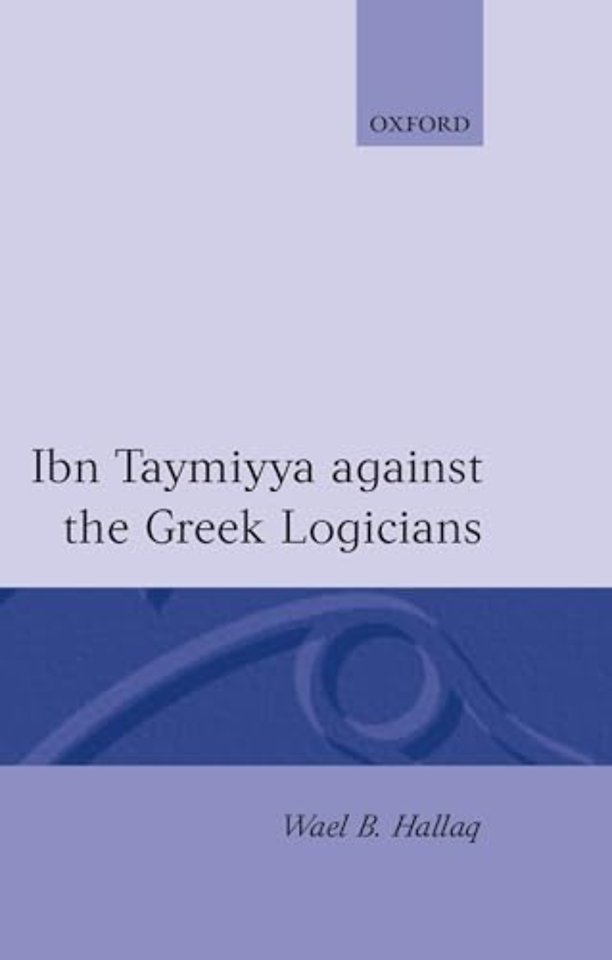
Ibn Taymiyya Against the Greek Logicians
Samenvatting
The introduction of Greek philosophy into the Muslim world left an indelible mark on Islamic intellectual history. Philosophical discourse became a constant element in even traditionalist Islamic sciences. However, Aristotelian metaphysics gave rise to doctrines about God and the universe that were found highly objectionable by a number of Muslim theologians, among whom the fourteenth-century scholar Ibn Taymiyya stood foremost.
Ibn Taymiyya, one of the greatest and most prolific thinkers in medieval Islam, held Greek logic responsible for the `heretical' metaphysical conclusions reached by Islamic philosophers, theologians, mystics, and others. He therefore set out to refute philosophical logic, a task which culminated in one of the most devastating attacks ever levelled against the logical system upheld by the early Greeks, the later commentators, and their Muslim followers. His argument is grounded in an empirical approach that in many respects prefigures the philosophies of the British empiricists.
Professor Hallaq's translation, with a substantial introduction and extensive notes, makes this important work available to a wider audience for the first time.
Specificaties
Net verschenen
Rubrieken
- aanbestedingsrecht
- aansprakelijkheids- en verzekeringsrecht
- accountancy
- algemeen juridisch
- arbeidsrecht
- bank- en effectenrecht
- bestuursrecht
- bouwrecht
- burgerlijk recht en procesrecht
- europees-internationaal recht
- fiscaal recht
- gezondheidsrecht
- insolventierecht
- intellectuele eigendom en ict-recht
- management
- mens en maatschappij
- milieu- en omgevingsrecht
- notarieel recht
- ondernemingsrecht
- pensioenrecht
- personen- en familierecht
- sociale zekerheidsrecht
- staatsrecht
- strafrecht en criminologie
- vastgoed- en huurrecht
- vreemdelingenrecht