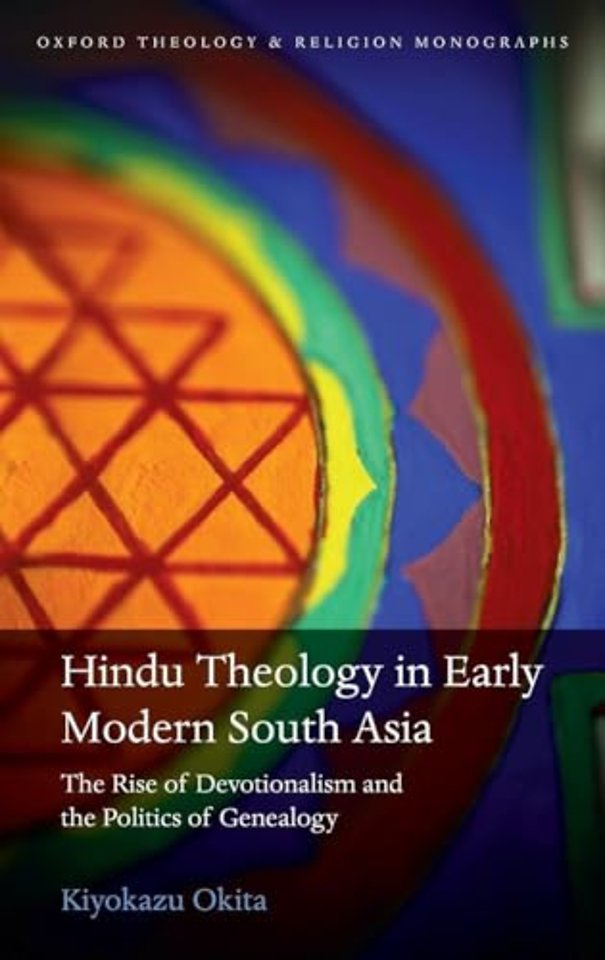
Hindu Theology in Early Modern South Asia
The Rise of Devotionalism and the Politics of Genealogy
Samenvatting
Focusing on the idea of genealogical affiliation (sampradāya), Kiyokazu Okita explores the interactions between the royal power and the priestly authority in eighteenth-century north India. He examines how the religious policies of Jaisingh II (1688-1743) of Jaipur influenced the self-representation of Gauḍīya Vaiṣṇavism, as articulated by Baladeva Vidyābhūṣaṇa (ca. 1700-1793). Gauḍīya Vaiṣṇavism centred around God Kṛṣṇa was inaugurated by Caitanya (1486-1533) and quickly became one of the most influential Hindu devotional movements in early modern South Asia.
In the increasingly volatile late Mughal period, Jaisingh II tried to establish the legitimacy of his kingship by resorting to a moral discourse. As part of this discourse, he demanded that religious traditions in his kingdom conform to what he conceived of as Brahmaṇicaly normative. In this context the Gauḍīya school was forced to deal with their lack of clear genealogical affiliation, lack of an independent commentary on the Brahmasūtras, and their worship of Goddess Radha and Kṛṣṇa, who, according to the Gauḍīyas, were not married. Based on a study of Baladeva's Brahmasūtra commentary, Kiyokazu Okita analyses how the Gauḍīyas responded to the king's demand.
Specificaties
Net verschenen
Rubrieken
- aanbestedingsrecht
- aansprakelijkheids- en verzekeringsrecht
- accountancy
- algemeen juridisch
- arbeidsrecht
- bank- en effectenrecht
- bestuursrecht
- bouwrecht
- burgerlijk recht en procesrecht
- europees-internationaal recht
- fiscaal recht
- gezondheidsrecht
- insolventierecht
- intellectuele eigendom en ict-recht
- management
- mens en maatschappij
- milieu- en omgevingsrecht
- notarieel recht
- ondernemingsrecht
- pensioenrecht
- personen- en familierecht
- sociale zekerheidsrecht
- staatsrecht
- strafrecht en criminologie
- vastgoed- en huurrecht
- vreemdelingenrecht