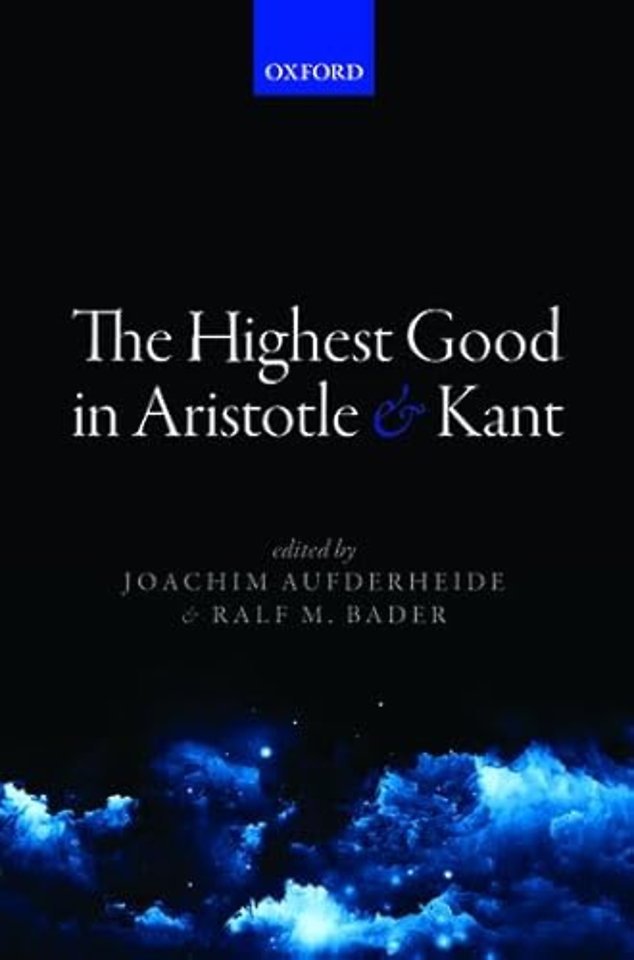
The Highest Good in Aristotle and Kant
Samenvatting
The notion of the highest good used to occupy a primary role in ethical theorising, but has largely disappeared from the contemporary landscape. The notion was central to both Aristotle's and Kant's ethical theories, however--a surprising observation given that their approaches to ethics are commonly conceived as being diametrically opposed. The essays in this collection provide a comprehensive treatment of the highest good in Aristotle and Kant and show that, even though there are important differences in terms of content, there are also important similarities in terms of the structural features of Aristotle's and Kant's value theories. By carefully analysing Aristotle's and Kant's theories of the highest good, a team of experts in the field shed light on their respective ethical theories and highlight the richness, complexity, and fruitfulness of the notion of the highest good.
Specificaties
Net verschenen
Rubrieken
- aanbestedingsrecht
- aansprakelijkheids- en verzekeringsrecht
- accountancy
- algemeen juridisch
- arbeidsrecht
- bank- en effectenrecht
- bestuursrecht
- bouwrecht
- burgerlijk recht en procesrecht
- europees-internationaal recht
- fiscaal recht
- gezondheidsrecht
- insolventierecht
- intellectuele eigendom en ict-recht
- management
- mens en maatschappij
- milieu- en omgevingsrecht
- notarieel recht
- ondernemingsrecht
- pensioenrecht
- personen- en familierecht
- sociale zekerheidsrecht
- staatsrecht
- strafrecht en criminologie
- vastgoed- en huurrecht
- vreemdelingenrecht