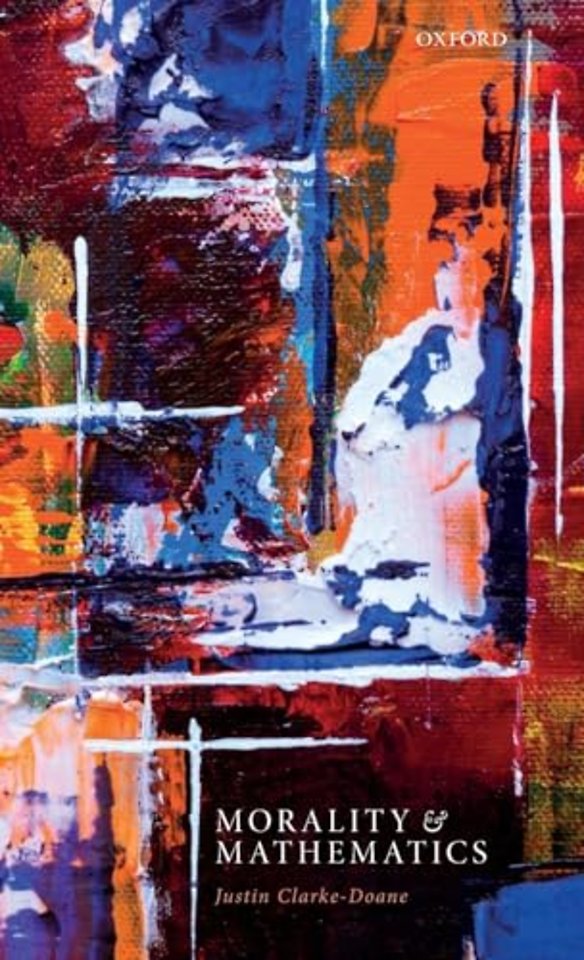
Morality and Mathematics
Samenvatting
To what extent are the subjects of our thoughts and talk real? This is the question of realism. In this book, Justin Clarke-Doane explores arguments for and against moral realism and mathematical realism, how they interact, and what they can tell us about areas of philosophical interest more generally. He argues that, contrary to widespread belief, our mathematical beliefs have no better claim to being self-evident or provable than our moral beliefs. Nor do our mathematical beliefs have better claim to being empirically justified than our moral beliefs. It is also incorrect that reflection on the genealogy of our moral beliefs establishes a lack of parity between the cases. In general, if one is a moral antirealist on the basis of epistemological considerations, then one ought to be a mathematical antirealist as well. And, yet, Clarke-Doane shows that moral realism and mathematical realism do not stand or fall together -- and for a surprising reason. Moral questions, insofar as they are practical, are objective in a sense that mathematical questions are not, and the sense in which they are objective can only be explained by assuming practical anti-realism. One upshot of the discussion is that the concepts of realism and objectivity, which are widely identified, are actually in tension. Another is that the objective questions in the neighborhood of factual areas like logic, modality, grounding, and nature are practical questions too. Practical philosophy should, therefore, take center stage.
Specificaties
Net verschenen
Rubrieken
- aanbestedingsrecht
- aansprakelijkheids- en verzekeringsrecht
- accountancy
- algemeen juridisch
- arbeidsrecht
- bank- en effectenrecht
- bestuursrecht
- bouwrecht
- burgerlijk recht en procesrecht
- europees-internationaal recht
- fiscaal recht
- gezondheidsrecht
- insolventierecht
- intellectuele eigendom en ict-recht
- management
- mens en maatschappij
- milieu- en omgevingsrecht
- notarieel recht
- ondernemingsrecht
- pensioenrecht
- personen- en familierecht
- sociale zekerheidsrecht
- staatsrecht
- strafrecht en criminologie
- vastgoed- en huurrecht
- vreemdelingenrecht