Form, Matter, Substance
Samenvatting
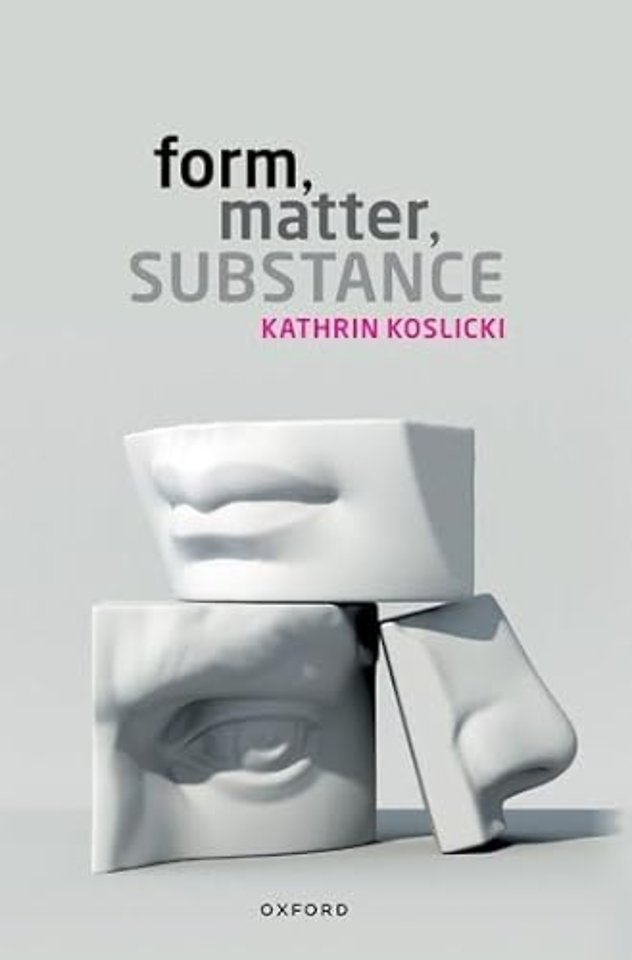
In Form, Matter, Substance, Kathrin Koslicki develops a contemporary defence of the Aristotelian doctrine of hylomorphism. According to this approach, objects are compounds of matter (hule) and form (morphe or eidos) and a living organism is not exhausted by the body, cells, organs, tissue, and the like that compose it. Koslicki argues that a hylomorphic analysis of concrete particular objects is well equipped to compete with alternative approaches when measured against a wide range of criteria of success. However, a plausible application of the doctrine of hylomorphism to the special case of concrete particular objects hinges on how hylomorphists conceive of the matter composing a concrete particular object, its form, and the hylomorphic relations which hold between a matter-form compound, its matter and its form. Koslicki offers detailed answers to the questions surrounding this approach to the metaphysics of concrete particular objects. As a result, matter-form compounds emerge as occupying the privileged ontological status traditionally associated with substances, despite their metaphysical complexity, due to their high degree of unity.
Specificaties
Net verschenen
Rubrieken
- aanbestedingsrecht
- aansprakelijkheids- en verzekeringsrecht
- accountancy
- algemeen juridisch
- arbeidsrecht
- bank- en effectenrecht
- bestuursrecht
- bouwrecht
- burgerlijk recht en procesrecht
- europees-internationaal recht
- fiscaal recht
- gezondheidsrecht
- insolventierecht
- intellectuele eigendom en ict-recht
- management
- mens en maatschappij
- milieu- en omgevingsrecht
- notarieel recht
- ondernemingsrecht
- pensioenrecht
- personen- en familierecht
- sociale zekerheidsrecht
- staatsrecht
- strafrecht en criminologie
- vastgoed- en huurrecht
- vreemdelingenrecht