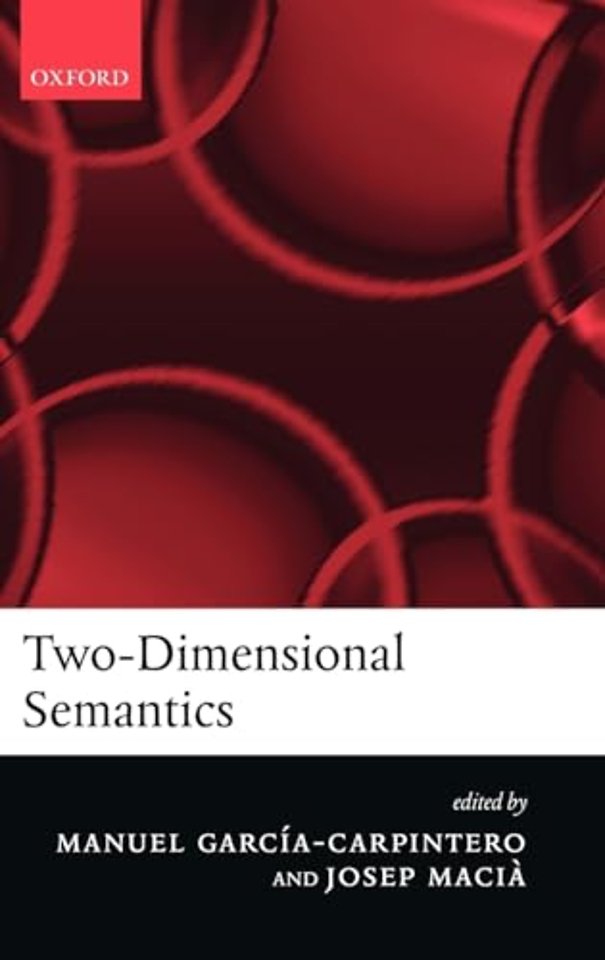
Two-Dimensional Semantics
Samenvatting
According to two-dimensional semantics, the meaning of an expression involves two different "dimensions": one dimension involves reference and truth-conditions of a familiar sort, while the other dimension involves the way that reference and truth-conditions depend on the external world (for example, reference and truth-conditions might be held to depend on which individuals and substances are present in the world, or on which linguistic conventions are in place). A number of different two-dimensional frameworks have been developed, and these have been applied to a number of fundamental problems in philosophy: the nature of communication, the relation between the necessary and the a priori, the role of context in assertion, Frege's distinction between sense and reference, the contents of thought, and the mind-body problem.
Manuel Garcia-Carpintero and Josep Macia present a selection of new essays by an outstanding international team, shedding fresh light both on foundational issues regarding _ two-dimensional semantics and on its specific applications. The volume will be the starting-point for future work on this approach to issues in philosophy of language, _ epistemology, and metaphysics. _
Specificaties
Net verschenen
Rubrieken
- aanbestedingsrecht
- aansprakelijkheids- en verzekeringsrecht
- accountancy
- algemeen juridisch
- arbeidsrecht
- bank- en effectenrecht
- bestuursrecht
- bouwrecht
- burgerlijk recht en procesrecht
- europees-internationaal recht
- fiscaal recht
- gezondheidsrecht
- insolventierecht
- intellectuele eigendom en ict-recht
- management
- mens en maatschappij
- milieu- en omgevingsrecht
- notarieel recht
- ondernemingsrecht
- pensioenrecht
- personen- en familierecht
- sociale zekerheidsrecht
- staatsrecht
- strafrecht en criminologie
- vastgoed- en huurrecht
- vreemdelingenrecht