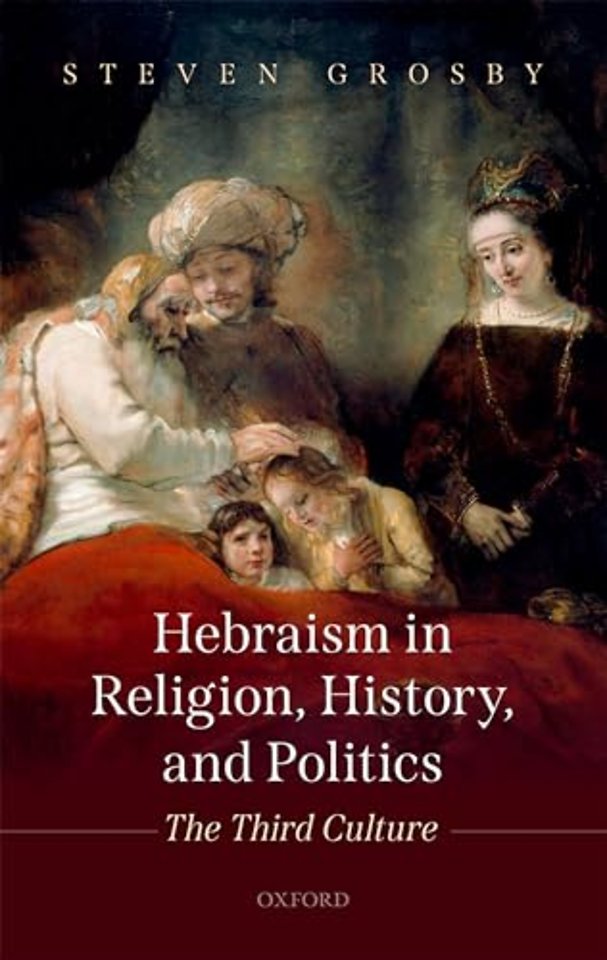
Hebraism in Religion, History, and Politics
The Third Culture
Samenvatting
Hebraism in Religion, History, and Politics is an investigation into Hebraism as a category of cultural analysis within the history of Christendom. Its aim is to determine what Hebraism means or should mean when it is used. The characteristics of Hebraism indicate a changing relation between the Old and New Testaments that arose in Medieval and early modern Europe, between on the one hand a doctrinally universal Christianity, and on the other various Christian nations that were understood as being a 'new Israel'. Thus, Hebraism refers to the development of a paradoxically intriguing 'Jewish Christianity' or an 'Old Testament Christianity'. It represents a 'third culture' in contrast to the culture of Roman or Hellenistic empire and Christian universalism. There were attempts, with varying success, during the twentieth century to clarify Hebraism as a category of cultural history and religious history. Steven Grosby expertly contributes to that clarification. In so doing, the possibility arises that Hebraism and Hebraic culture offer a different way to look at religion, its history, and the history of the West.
Specificaties
Net verschenen
Rubrieken
- aanbestedingsrecht
- aansprakelijkheids- en verzekeringsrecht
- accountancy
- algemeen juridisch
- arbeidsrecht
- bank- en effectenrecht
- bestuursrecht
- bouwrecht
- burgerlijk recht en procesrecht
- europees-internationaal recht
- fiscaal recht
- gezondheidsrecht
- insolventierecht
- intellectuele eigendom en ict-recht
- management
- mens en maatschappij
- milieu- en omgevingsrecht
- notarieel recht
- ondernemingsrecht
- pensioenrecht
- personen- en familierecht
- sociale zekerheidsrecht
- staatsrecht
- strafrecht en criminologie
- vastgoed- en huurrecht
- vreemdelingenrecht