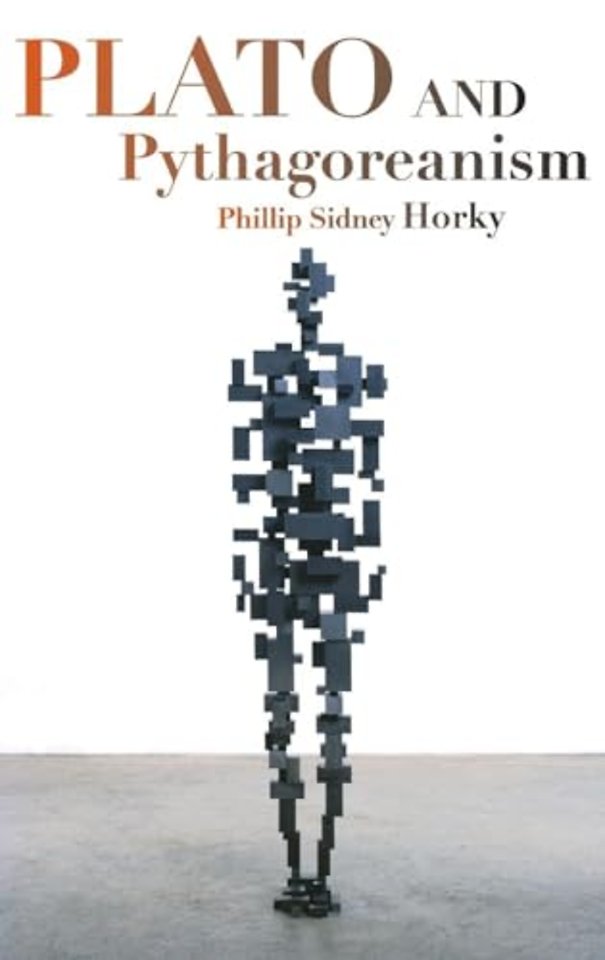
Plato and Pythagoreanism
Samenvatting
Was Plato a Pythagorean? Plato's students and earliest critics thought so, but scholars since the 19th century have been more skeptical. In Plato and Pythagoreanism, Phillip Sidney Horky argues that a specific type of Pythagorean philosophy, called "mathematical" Pythagoreanism, exercised a decisive influence on fundamental aspects of Plato's philosophy. The progenitor of mathematical Pythagoreanism was the infamous Pythagorean heretic and political revolutionary Hippasus of Metapontum, a student of Pythagoras who is credited with experiments in harmonics that led to innovations in mathematics. The innovations of Hippasus and other mathematical Pythagoreans, including Empedocles of Agrigentum, Epicharmus of Syracuse, Philolaus of Croton, and Archytas of Tarentum, presented philosophers like Plato with new approaches to science that sought to reconcile empirical knowledge with abstract mathematical theories. Plato and Pythagoreanism shows how mathematical Pythagoreanism established many of the fundamental philosophical questions Plato dealt with in his central dialogues, including Cratylus, Phaedo, Republic, Timaeus, and Philebus. In the process, it also illuminates the historical significance of the mathematical Pythagoreans, a group whose influence over the development of philosophical and scientific methods have been obscured since late antiquity. The picture that results is one in which Plato inherits mathematical Pythagorean method only to transform it into a powerful philosophical argument concerning the essential relationships between the cosmos and the human being.
Specificaties
Net verschenen
Rubrieken
- aanbestedingsrecht
- aansprakelijkheids- en verzekeringsrecht
- accountancy
- algemeen juridisch
- arbeidsrecht
- bank- en effectenrecht
- bestuursrecht
- bouwrecht
- burgerlijk recht en procesrecht
- europees-internationaal recht
- fiscaal recht
- gezondheidsrecht
- insolventierecht
- intellectuele eigendom en ict-recht
- management
- mens en maatschappij
- milieu- en omgevingsrecht
- notarieel recht
- ondernemingsrecht
- pensioenrecht
- personen- en familierecht
- sociale zekerheidsrecht
- staatsrecht
- strafrecht en criminologie
- vastgoed- en huurrecht
- vreemdelingenrecht