,

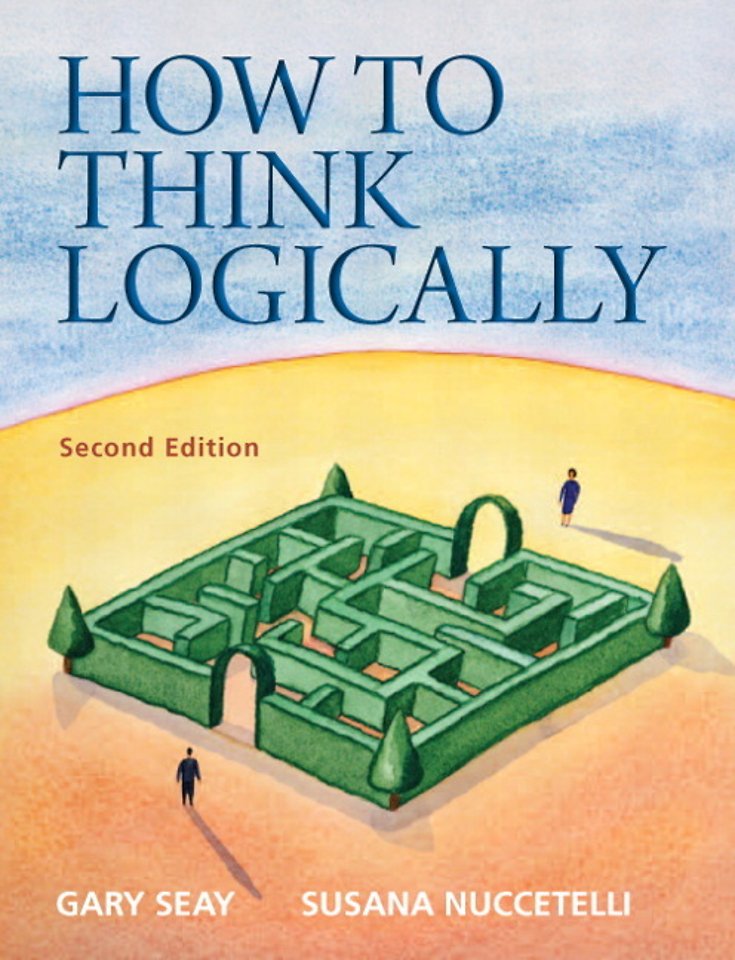
How to Think Logically

Specificaties
Paperback, blz. | Engels
Pearson Education | e druk, 2012
ISBN13: 9780205154982
Rubricering
Juridisch :
Pearson Education e druk, 2012 9780205154982
€ 72,94
Levertijd ongeveer 9 werkdagen
Gratis verzonden

Samenvatting

Concise Principles of Reasoning


Concise, yet covering all the basics of a 15-week course in informal logic or critical reasoning, this text engages students with a lively format and clear writing style. The small scale of the book keeps the cost low, a vital consideration in today’s economy, yet without compromising on logical rigor.


The author’s presentation strikes a careful balance: it offers clear, jargon-free writing while preserving rigor.  Brimming with numerous pedagogical features, this accessible text assists students with analysis, reconstruction, and evaluation of arguments and helps them become independent, analytical thinkers.  Introductory students are exposed to the basic principles of reasoning while also having their appetites whetted for future courses in philosophy.


Teaching and Learning Experience


Improve Critical Thinking - Abundant pedagogical aids -- including exercises and study questions within each chapter -- encourage students to examine their assumptions, discern hidden values, evaluate evidence, assess their conclusions, and more!


Engage Students - Chapter and section outlines, summaries, illustrative examples, special-emphasis boxes and key terms present new ideas in manageable-sized units of information so students can digest each concept before moving on to the next one, and ensure students key-in on crucial points to remember.


Support Instructors -Teaching your course just got easier!  You can create a Customized Text or use our Instructor’s Manual, or PowerPoint Presentation Slides.  Plus, this concise textbook contains only as much material as you can cover in a course, creating an affordable alternative you can assign with confidence to a cost-conscious student population.  Additionally, each chapter in How to Think Logically is designed as a self-contained unit so that you can choose the combination and order of chapters according to the needs of your courses; making the text a flexible base for courses in logic, critical thinking, and rhetoric.


Specificaties

ISBN13:9780205154982
Taal:Engels
Bindwijze:Paperback

Inhoudsopgave

<p>IN THIS SECTION:</p> <p>1.) BRIEF</p> <p>2.) COMPREHENSIVE</p> <p> <br></p> <p><strong>BRIEF TABLE OF CONTENTS</strong></p> <p><strong>PART I: THE BUILDING BLOCKS OF REASONING</strong></p> <p><strong>Chapter One </strong> What Is Logical Thinking? And Why Should We Care?</p> <p><strong>Chapter Two</strong> Thinking Logically and Speaking One’s Mind</p> <p><strong>Chapter Three </strong> The Virtues of Belief</p> <p><strong>PART II: REASON AND ARGUMENT</strong></p> <p><strong>Chapter Four</strong> Tips for Argument Analysis</p> <p><strong>Chapter Five</strong> Evaluating Deductive Arguments</p> <p><strong>Chapter Six</strong> Analyzing Inductive Arguments</p> <p><strong>PART III: INFORMAL FALLACIES</strong></p> <p><strong>Chapter Seven</strong> Some Ways an Argument Can Fail</p> <p><strong>Chapter Eight</strong> Avoiding Ungrounded Assumptions</p> <p><strong>Chapter Nine</strong> From Unclear Language to Unclear Reasoning</p> <p><strong>Chapter Ten</strong> Avoiding Irrelevant Premises</p> <p><strong>PART IV: MORE ON DEDUCTIVE REASONING</strong></p> <p><strong>Chapter Eleven</strong> Compound Propositions</p> <p><strong>Chapter Twelve</strong> Checking the Validity of Propositional Arguments</p> <p><strong>Chapter Thirteen</strong> Categorical Propositions and Immediate Inferences</p> <p><strong>Chapter Fourteen</strong> Categorical Syllogisms</p> <p>Appendix: Summary of Informal Fallacies</p> <p>Answers to Selected Exercises</p> <p>Glossary/Index</p> <p> <br></p> <p><strong>COMPREHENSIVE TABLE OF CONTENTS</strong></p> <p><strong>PART I: THE BUILDING BLOCKS OF REASONING</strong></p> <p><strong>Chapter One</strong> What Is Logical Thinking? And Why Should We Care?</p> <p> 1.1 The Study of Reasoning</p> <p> 1.2 Logic and Reasoning</p> <p> 1.3 What Arguments Are</p> <p> 1.4 Reconstructing Arguments</p> <p> 1.5 Arguments and Non-arguments</p> <p> 1.6 Chapter Summary</p> <p> 1.7 Key Words</p> <p><strong>Chapter Two</strong> Thinking Logically and Speaking One’s Mind</p> <p> 2.1 Rational Acceptability</p> <p> 2.2 Beyond Rational Acceptability</p> <p> 2.3 From Mind to Language</p> <p> 2.4 Indirect Use and Figurative Language</p> <p> 2.5 Definition: An Antidote to Unclear Language</p> <p> 2.6 Chapter Summary</p> <p> 2.7 Key Words</p> <p><strong>Chapter Three</strong> The Virtues of Belief</p> <p> 3.1 Belief, Disbelief, and Non-Belief</p> <p> 3.2 Beliefs’ Virtues and Vices</p> <p> 3.3 Accuracy and Truth</p> <p> 3.4 Reasonableness</p> <p> 3.5 Consistency</p> <p> 3.6 Conservatism and Revisability</p> <p> 3.7 Rationality vs. Irrationality</p> <p> 3.8 Chapter Summary</p> <p> 3.9 Key Words</p> <p><strong>PART II: REASON AND ARGUMENT</strong></p> <p><strong>Chapter Four</strong> Tips for Argument Analysis</p> <p> 4.1 A Principled Way of Reconstructing Arguments</p> <p> 4.2 Missing Premises</p> <p> 4.3 Extended Arguments</p> <p> 4.4 Types of Reason</p> <p> 4.5 Norms and Argument</p> <p> 4.6 Chapter Summary</p> <p> 4.7 Key Words</p> <p><strong>Chapter Five</strong> Evaluating Deductive Arguments</p> <p> 5.1 Validity</p> <p> 5.2 Soundness</p> <p> 5.3 Cogency</p> <p> 5.4 Chapter Summary</p> <p> 5.5 Key Words</p> <p><strong>Chapter Six</strong> Analyzing Inductive Arguments</p> <p> 6.1 Reconstructing Inductive Arguments</p> <p> 6.2 Some Types of Inductive Argument</p> <p> 6.3 Evaluating Inductive Arguments</p> <p> 6.4 Chapter Summary</p> <p> 6.5 Key Words</p> <p><strong>PART III: INFORMAL FALLACIES</strong></p> <p><strong>Chapter Seven</strong> Some Ways an Argument Can Fail</p> <p> 7.1 What Is a Fallacy?</p> <p> 7.2 Classification of Informal Fallacies</p> <p> 7.3 When Inductive Arguments Go Wrong</p> <p> 7.4 Chapter Summary</p> <p> 7.5 Key Words</p> <p><strong>Chapter Eight</strong> Avoiding Ungrounded Assumptions</p> <p> 8.1 Fallacies of Presumption</p> <p> 8.2 Begging the Question</p> <p> 8.3 Begging-the-Question-Against</p> <p> 8.4 Complex Question</p> <p> 8.5 False Alternatives</p> <p> 8.6 Accident</p> <p> 8.7 Chapter Summary</p> <p> 8.8 Key Words</p> <p><strong>Chapter Nine</strong> From Unclear Language to Unclear Reasoning</p> <p> 9.1 Unclear Language and Argument Failure</p> <p> 9.2 Semantic Unclarity</p> <p> 9.3 Vagueness</p> <p> 9.4 Ambiguity</p> <p> 9.5 Confused Predication</p> <p> 9.6 Chapter Summary</p> <p> 9.7 Key Words</p> <p> <strong>Chapter Ten </strong>Avoiding Irrelevant Premises</p> <p> 10.1 Fallacies of Relevance</p> <p> 10.2 Appeal to Pity</p> <p> 10.3 Appeal to Force</p> <p> 10.4 Appeal to Emotion</p> <p> 10.5 Ad Hominem</p> <p> 10.6 Beside the Point</p> <p> 10.7 Straw Man</p> <p> 10.8 Is the Appeal to Emotion Always Fallacious?</p> <p> 10.9 Chapter Summary</p> <p> 10.10 Key Words</p> <p><strong>PART IV: MORE ON DEDUCTIVE REASONING</strong></p> <p><strong>Chapter Eleven</strong> Compound Propositions</p> <p> 11.1 Argument as a Relation Between Propositions</p> <p> 11.2 Simple and Compound Propositions</p> <p> 11.3 Symbolizing Compound Propositions</p> <p> 11.4 Defining Connectives with Truth Tables</p> <p> 11.5 Truth Tables for Compound Propositions</p> <p> 11.6 Chapter Summary</p> <p> 11.7 Key Words</p> <p><strong>Chapter Twelve</strong> Checking the Validity of Propositional Arguments</p> <p> 12.1 Checking Validity with Truth Tables</p> <p> 12.2 Some Standard Argument Forms</p> <p> 12.3 Formal Fallacies</p> <p> 12.4 A Simplified Approach to Proofs of Validity</p> <p> 12.5 Chapter Summary</p> <p> 12.6 Key Words</p> <p><strong>Chapter Thirteen</strong> Categorical Propositions and Immediate Inferences</p> <p> 13.1 What Is a Categorical Proposition?</p> <p> 13.2 Venn Diagrams for Categorical Propositions</p> <p> 13.3 The Square of Opposition</p> <p> 13.4 Other Immediate Inferences</p> <p> 13.5 Chapter Summary</p> <p> 13.6 Key Words</p> <p><strong>Chapter Fourteen</strong> Categorical Syllogisms</p> <p> 14.1 What Is a Categorical Syllogism?</p> <p> 14.2 Syllogistic Argument Forms</p> <p> 14.3 Testing for Validity with Venn Diagrams</p> <p> 14.4 Distribution of Terms</p> <p> 14.5 Rules of Validity and Syllogistic Fallacies</p> <p> 14.6 Chapter Summary</p> <p> 14.7 Key Words</p> <p>Appendix: Summary of Informal Fallacies</p> <p>Answers to Selected Exercises</p> <p>Glossary/Index</p>

Net verschenen

€ 72,94
Levertijd ongeveer 9 werkdagen
Gratis verzonden

Rubrieken

    Personen

      Trefwoorden

        How to Think Logically