,

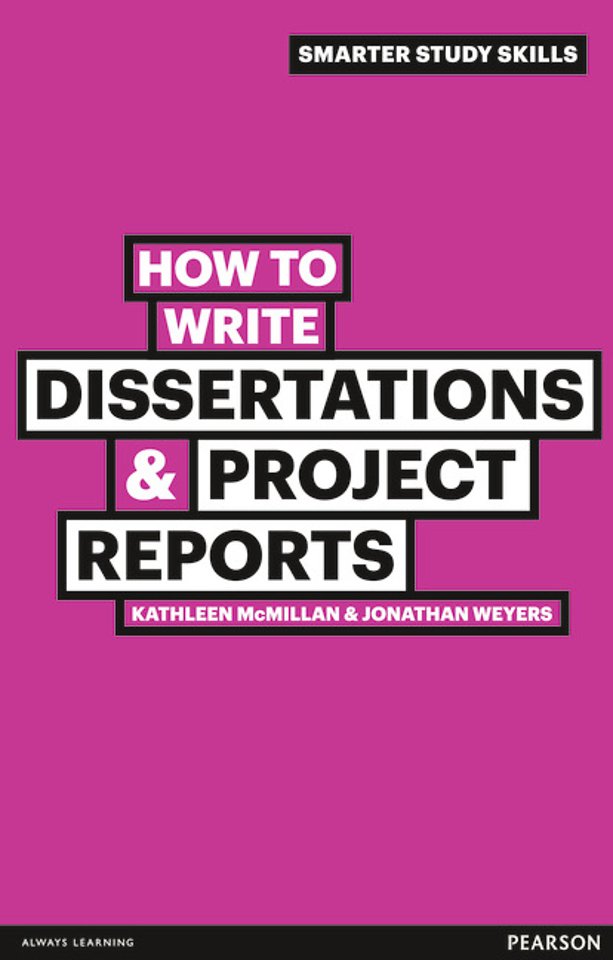
How to Write Dissertations & Project Reports

Specificaties
Paperback, blz. | Engels
Pearson Education | e druk, 2011
ISBN13: 9780273743835
Rubricering
Juridisch :
Pearson Education e druk, 2011 9780273743835
Onderdeel van serie Smarter Study Skills
€ 21,34
Levertijd ongeveer 9 werkdagen
Gratis verzonden

Samenvatting

How to Write Dissertations & Project Reports

Kathleen McMillan & Jonathan Weyers


Is there a secret to successful study?


The answer is 'yes'! There are some essential skills and smart strategies that will help you to improve your results at university.


This easy-to-use guide identifies and addresses the areas where most students need help with planning and then writing dissertations and project reports, and provides straightforward, practical tips and solutions that will enable you to assess and then improve your performance.


How to write Dissertations and Project Reports provides all of the tips, tools and techniques that you need to choose, research, write and present successful dissertations and research projects, including: How  to structure and plan your writing proposal How to undertake experimental work and field research How to read & analyse information and take notes effectively How to interpret, analyse and present numerical & research data How to improve your academic writing style How to cite references and avoid plagiarism How to review, proof-read and present your dissertation or project for maximum impact & results


Visit www.smarterstudyskills.com to access a wealth of useful information, tips, templates and interactive activities that will support your skills development.

Specificaties

ISBN13:9780273743835
Taal:Engels
Bindwijze:Paperback

Inhoudsopgave

<p>Introduction</p> <p>1. Tackling a dissertation or project report: how to make the best possible start</p> <p>2. Choosing a dissertation or project report: how to decide on a theme for your investigation</p> <p>Planning your research </p> <p>3. Writing a proposal: how to structure a successful dissertation or research proposal</p> <p>4. Time management: how to write your dissertation or project while balancing family, work and leisure</p> <p>5. Planning for dissertations: how to begin your research and evolve a model for your writing</p> <p>6. Planning for experimental projects: how to organise your efforts effectively</p> <p>Finding and filtering information</p> <p>7. &nbsp;Information literacy: how to make the best use of the library resources</p> <p>8. Effective academic reading: how to read efficiently and with understanding</p> <p>9. Analysing and evaluating source material: how to filter and select relevant material as part of the research process</p> <p>10. Note-making from source material: how to create effective notes to support your dissertation and project research</p> <p>Applying research techniques </p> <p>11. Principles of quantitative research: &nbsp;how to obtain and analyse numerical information</p> <p>12. Principles of qualitative research: how to obtain and analyse descriptive information</p> <p>13.Experimental research and field visits: how to develop and apply your skills</p> <p>14. Thinking critically: how to develop a logical approach to analysis and problem-solving</p> <p>Working with Data &amp; Numbers</p> <p>15. Number crunching: how to solve problems in arithmetic and algebra</p> <p>16. Interpreting and presenting data: how to understand &amp; produce graphs, tables &amp; basic statistics </p> <p>Addressing issues of plagiarism, referencing&nbsp;amd ethics</p> <p>17. Plagiarism and copyright infringement: how to avoid being accused of ‘stealing’ the ideas&nbsp;and work of others</p> <p>18. Citing and listing references: how to refer appropriately to the work of others </p> <p>19. Ethics in researching and reporting: how to follow good research practice</p> <p>Writing a first draft</p> <p>20. Structuring a dissertation: how to organise your writing within a standard framework</p> <p>21. Structuring a project report: how to select and shape your content appropriately</p> <p>22. Academic writing style: how to adopt appropriate language conventions</p> <p>Editing, revising and presenting</p> <p>25. Reviewing, editing&nbsp;and proof-reading: how to make sure that your writing is concise and correct </p> <p>26. Exploiting feedback: how to understand and learn from what your supervisor writes on your work</p> <p>27. Presentation of dissertations and reports: how to follow the appropriate academic conventions</p> <p>References and further reading</p> <p>Glossary</p>

Net verschenen

€ 21,34
Levertijd ongeveer 9 werkdagen
Gratis verzonden

Rubrieken

    Personen

      Trefwoorden

        How to Write Dissertations & Project Reports