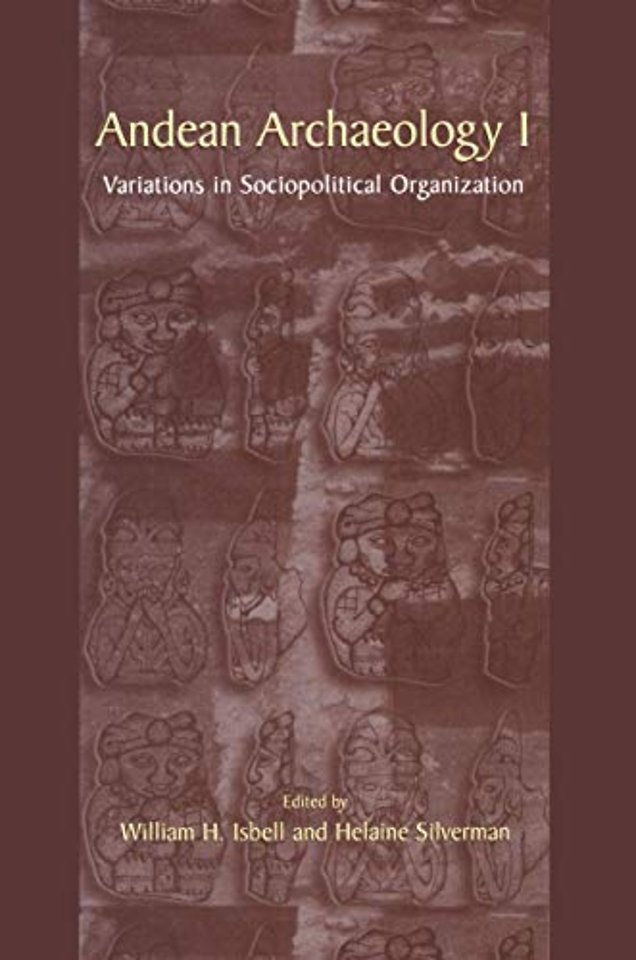
Andean Archaeology I
Variations in Sociopolitical Organization
Samenvatting
Study of the origin and development of civilization is of unequaled importance for understanding the cultural processes that create human societies. Is cultural evolution directional and regular across human societies and history, or is it opportunistic and capricious? Do apparent regularities come from the way inves tigators construct and manage knowledge, or are they the result of real constraints on and variations in the actual processes? Can such questions even be answered? We believe so, but not easily. By comparing evolutionary sequences from different world civilizations scholars can judge degrees of similarity and difference and then attempt explanation. Of course, we must be careful to assess the influence that societies of the ancient world had on one another (the issue of pristine versus non-pristine cultural devel opment: see discussion in Fried 1967; Price 1978). The Central Andes were the locus of the only societies to achieve pristine civilization in the southern hemi sphere and only in the Central Andes did non-literate (non-written language) civ ilization develop. It seems clear that Central Andean civilization was independent on any graph of archaic culture change. Scholars have often expressed appreciation of the research opportunities offered by the Central Andes as a testing ground for the study of cultural evolu tion (see, e. g. , Carneiro 1970; Ford and Willey 1949: 5; Kosok 1965: 1-14; Lanning 1967: 2-5).
Specificaties
Inhoudsopgave
1. Introduction: Theorizing Variations in Andean Sociopolitical Organization; The Editors.
Part II: Early Andean Civilizations.
Section Introduction; The Editors. 2. The Sechín Alto Complex and Its Place Within Casma Valley Initial Period Development; S. Pozorski, Th. Pozorski. 3. Out in the Streets of Moche: Urbanism and Sociopolitical Organization at a Moche IV Urban Center; C. Chapdelaine. 4. Power and Social Ranking at the End of the Formative Period: the Lower Lurín Valley Cemeteries; K. Makowski. 5. Nasca Settlement and Society on the Hundredth Anniversary of Uhle's Discovery of the Nasca Style; H. Silverman.
Part III: Traditions of Imperialism in the Andes.
Section Introduction; The Editors. 6. Tiwanaku Political Economy; C. Stanish. 7. Iwawi and Tiwanaku; W.H. Isbell, J. Burkholder. 8. Imperial Interaction in the Andes: Huari and Tiwanaku at Cerro Baúl; P.R. Williams, D. Nash. 9. The Huaro Archaeological Site Complex: Rethinking the Huari Occupation of Cuzco; M. Glowacki. 10. The Archaeology of Inca Origins: Excavations at Chokepukio, Cuzco, Peru; G.F. McEwan, et al. 11. Catequil: The Archaeology, Ethnohistory and Ethnography of a Major Provincial Huaca; J.R. Topic, et al.
Part IV: Solving Puzzles of the Past.
Section Introduction: The Editors. 12. Tracking the Source of Quispisisa Obsidian from Huancavelica to Ayacucho; R.L. Burger, M.D. Glascock.
Part V: Conclusion.
13.Conclusion: Writing the Andes with a Capital A; The Editors.
Index.
Net verschenen
Rubrieken
- aanbestedingsrecht
- aansprakelijkheids- en verzekeringsrecht
- accountancy
- algemeen juridisch
- arbeidsrecht
- bank- en effectenrecht
- bestuursrecht
- bouwrecht
- burgerlijk recht en procesrecht
- europees-internationaal recht
- fiscaal recht
- gezondheidsrecht
- insolventierecht
- intellectuele eigendom en ict-recht
- management
- mens en maatschappij
- milieu- en omgevingsrecht
- notarieel recht
- ondernemingsrecht
- pensioenrecht
- personen- en familierecht
- sociale zekerheidsrecht
- staatsrecht
- strafrecht en criminologie
- vastgoed- en huurrecht
- vreemdelingenrecht