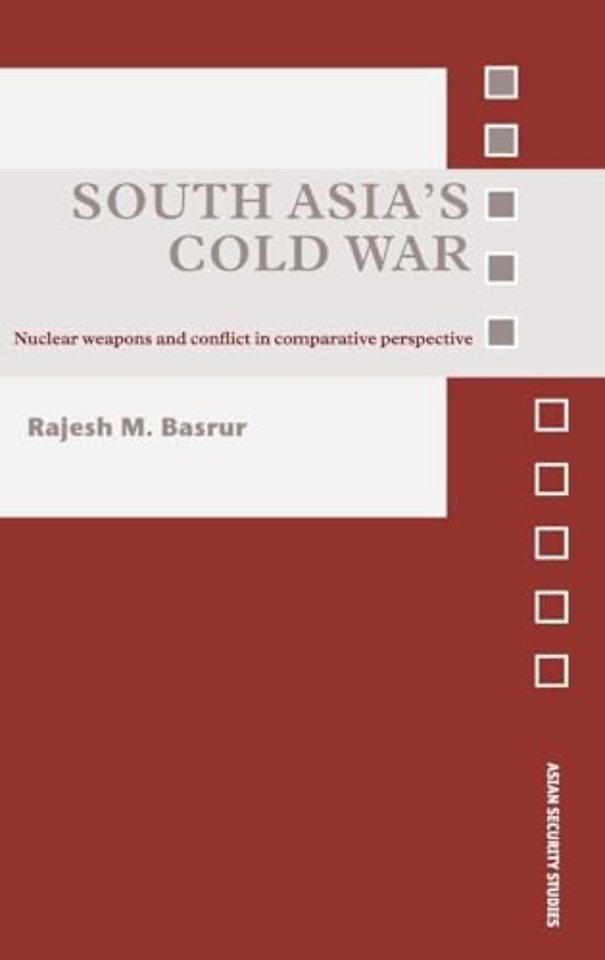
South Asia's Cold War
Nuclear Weapons and Conflict in Comparative Perspective
Samenvatting
This book is a ground-breaking analysis of the India-Pakistan nuclear confrontation as a form of ‘cold war’ – that is, a hostile relationship between nuclear rivals.
Drawing on nuclear rivalries between similar pairs (United States-Soviet Union, United States-China, Soviet Union-China, and United States-North Korea), the work examines the rise, process and potential end of the cold war between India and Pakistan. It identifies the three factors driving the India-Pakistan rivalry: ideational factors stemming from partition; oppositional roles created by the distribution of power in South Asia; and the particular kind of relationship created by nuclear weapons. The volume assesses why India and Pakistan continue in non-crisis times to think about power and military force in outmoded ways embedded in pre-nuclear times, and draws lessons applicable to them as well as to other contemporary nuclear powers and states that might be engaged in future cold wars.
Specificaties
Net verschenen
Rubrieken
- aanbestedingsrecht
- aansprakelijkheids- en verzekeringsrecht
- accountancy
- algemeen juridisch
- arbeidsrecht
- bank- en effectenrecht
- bestuursrecht
- bouwrecht
- burgerlijk recht en procesrecht
- europees-internationaal recht
- fiscaal recht
- gezondheidsrecht
- insolventierecht
- intellectuele eigendom en ict-recht
- management
- mens en maatschappij
- milieu- en omgevingsrecht
- notarieel recht
- ondernemingsrecht
- pensioenrecht
- personen- en familierecht
- sociale zekerheidsrecht
- staatsrecht
- strafrecht en criminologie
- vastgoed- en huurrecht
- vreemdelingenrecht