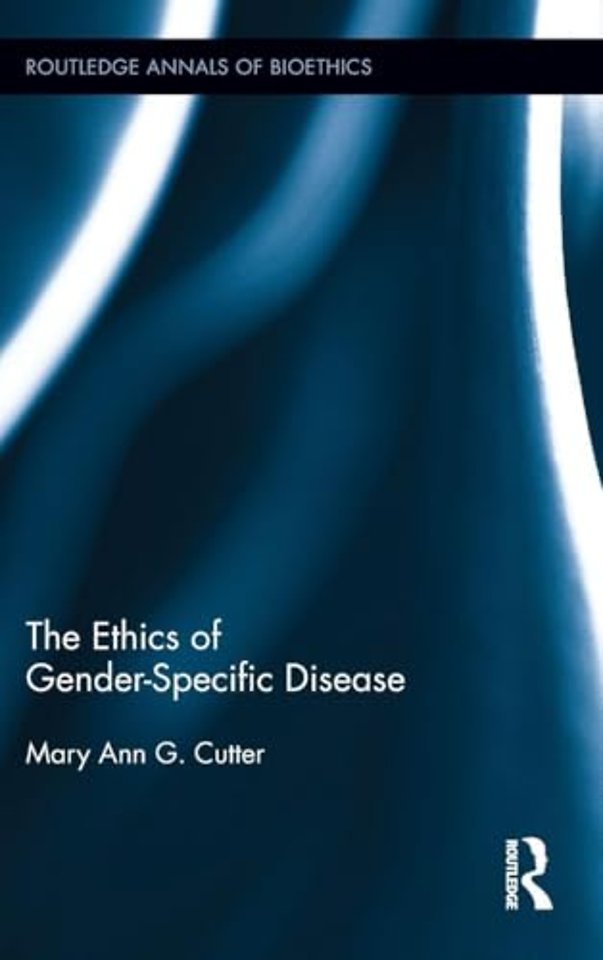
Ethics of Gender-Specific Disease
Samenvatting
Our understanding of gender carries significant bioethical implications. An errant account of gender-specific disease can lead to overgeneralizations, undergeneralizations, and misdiagnoses. It can also lead to problems in the structure of health-care delivery, the creation of policy, and the development of clinical curricula.
In this volume, Cutter argues that gender-specific disease and related bioethical discourses are philosophically integrative. Gender-specific disease is integrative because the descriptive roles of gender, disease, and their relation are inextricably tied to their prescriptive roles within frames of reference. An integrative account of gender-specific disease carries ethical implications because our understanding of gender-specific disease is evaluative, and our evaluations of gender-specific disease entail judgments concerning the praiseworthiness and blameworthiness of a clinical event. Cutter supports a "both/and" emphasis on context and integration in relation to gender-specific disease and bioethical analyses.
While the text mainly focuses on gender-specific diseases that affect women, Cutter also includes examples involving men, children, and members of the LGBT community.
Specificaties
Net verschenen
Rubrieken
- aanbestedingsrecht
- aansprakelijkheids- en verzekeringsrecht
- accountancy
- algemeen juridisch
- arbeidsrecht
- bank- en effectenrecht
- bestuursrecht
- bouwrecht
- burgerlijk recht en procesrecht
- europees-internationaal recht
- fiscaal recht
- gezondheidsrecht
- insolventierecht
- intellectuele eigendom en ict-recht
- management
- mens en maatschappij
- milieu- en omgevingsrecht
- notarieel recht
- ondernemingsrecht
- pensioenrecht
- personen- en familierecht
- sociale zekerheidsrecht
- staatsrecht
- strafrecht en criminologie
- vastgoed- en huurrecht
- vreemdelingenrecht