MC Thomsett
John Wiley & Sons
e druk, 2004
9780471668114
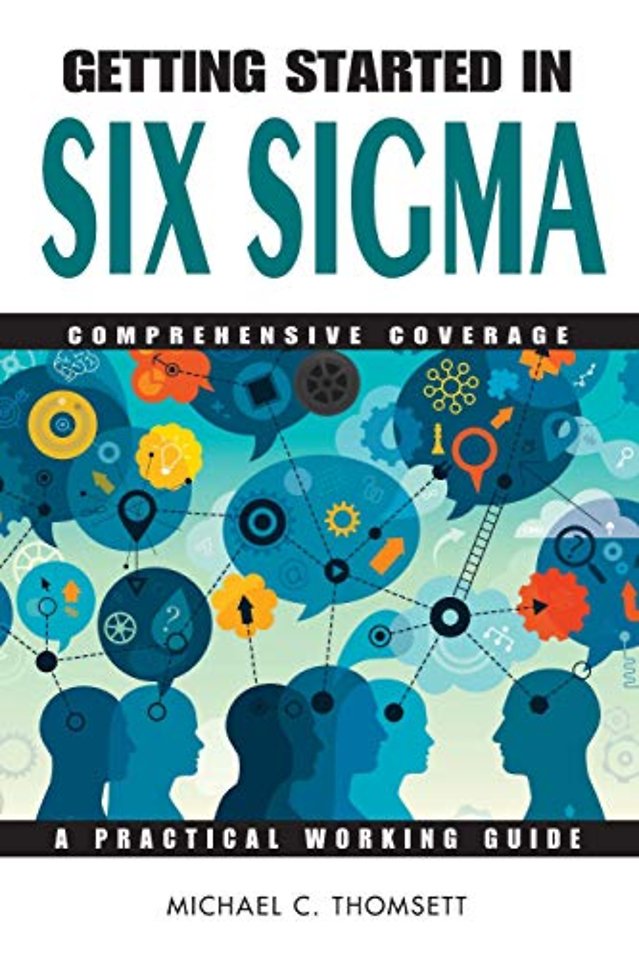
Getting Started in Six Sigma
Specificaties
Paperback, 224 blz.
|
Engels
John Wiley & Sons |
e druk, 2004
ISBN13: 9780471668114
Rubricering
Juridisch
:
Onderdeel van serie
Getting Started In...
Verwachte levertijd ongeveer 9 werkdagen
Samenvatting
The basics behind the Six Sigma quality control technique
Six Sigma is designed to achieve excellence in customer service and measure deviation from the ideal. It provides a process for placing value on the intangible nature of quality control. The underlying theories of Six Sigma are highly technical and complex. This book is a basic guide to those who are new to the concept, and though this is a complex subject, the concepts involved are not too complex for readers to grasp. Getting Started in Six Sigma demonstrates how an employee or supervisor can implement Six Sigma successfully without having to become technically familiar with process–oriented models or statistical modeling.
Specificaties
ISBN13:9780471668114
Taal:Engels
Bindwijze:paperback
Aantal pagina's:224
Uitgever:John Wiley & Sons
Hoofdrubriek:Inkoop en logistiek, Algemeen management
Serie:Getting Started In...
Inhoudsopgave
<p>Introduction Striving for Perfection in an Imperfect World 1</p>
<p>Chapter 1 The Meaning of Six Sigma 5</p>
<p>Chapter 2 The Customer′s Point of View 31</p>
<p>Chapter 3 Outside–In Thinking 61</p>
<p>Chapter 4 The Nature of Quality 91</p>
<p>Chapter 5 Product and Service Defects 117</p>
<p>Chapter 6 Improving Process Systems 139</p>
<p>Chapter 7 Striving for Consistency 165</p>
<p>Chapter 8 Exceptions and Rules 185</p>
<p>Glossary 205</p>
<p>Notes 209</p>
<p>Index 211</p>
<p>Chapter 1 The Meaning of Six Sigma 5</p>
<p>Chapter 2 The Customer′s Point of View 31</p>
<p>Chapter 3 Outside–In Thinking 61</p>
<p>Chapter 4 The Nature of Quality 91</p>
<p>Chapter 5 Product and Service Defects 117</p>
<p>Chapter 6 Improving Process Systems 139</p>
<p>Chapter 7 Striving for Consistency 165</p>
<p>Chapter 8 Exceptions and Rules 185</p>
<p>Glossary 205</p>
<p>Notes 209</p>
<p>Index 211</p>
Anderen die dit kochten, kochten ook
-
 Nigel Slack€ 92,14
 -
Nigel Slack€ 95,74
-
Marcel van Assen€ 39,95
-
Hein van der Horst€ 92,65
-
Hessel Visser€ 79,95
-
Brigitte Faber-de Lange€ 77,95





Net verschenen
Rubrieken
- aanbestedingsrecht
- aansprakelijkheids- en verzekeringsrecht
- accountancy
- algemeen juridisch
- arbeidsrecht
- bank- en effectenrecht
- bestuursrecht
- bouwrecht
- burgerlijk recht en procesrecht
- europees-internationaal recht
- fiscaal recht
- gezondheidsrecht
- insolventierecht
- intellectuele eigendom en ict-recht
- management
- mens en maatschappij
- milieu- en omgevingsrecht
- notarieel recht
- ondernemingsrecht
- pensioenrecht
- personen- en familierecht
- sociale zekerheidsrecht
- staatsrecht
- strafrecht en criminologie
- vastgoed- en huurrecht
- vreemdelingenrecht