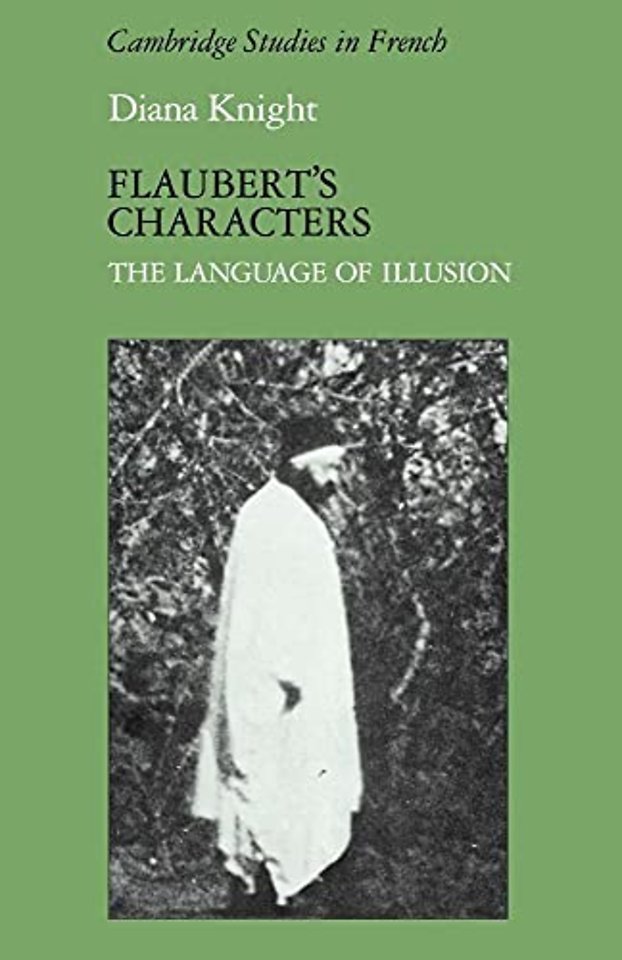
Flaubert's Characters
The Language of Illusion
Samenvatting
This major new study takes issue both with the traditional critical view that Flaubert's central characters are weak and with the approach adopted by a number of contemporary critics who claim that character is deliberately undermined in the interests of non-representational writing. Rather, Dr Knight explores the relationship between the contents of Flaubert's stories and his practice as a writer, thereby reinstating the functional value of character in his work. She shows that essential aspects of Flaubert's aesthetic - the opaqueness of language, stupidity, fascination and reverie as the object of art - depend on the psychological make-up of fictional characters: their pathological relationship to language and reality mirrors Flaubert's conception of the readers' stupefied response to his own stylistic effects and to his wilfully naive stories. Flaubert emerges as a representational writer, but one who is supremely self-conscious of the fictional status of his representations.
Specificaties
Inhoudsopgave
Net verschenen
Rubrieken
- aanbestedingsrecht
- aansprakelijkheids- en verzekeringsrecht
- accountancy
- algemeen juridisch
- arbeidsrecht
- bank- en effectenrecht
- bestuursrecht
- bouwrecht
- burgerlijk recht en procesrecht
- europees-internationaal recht
- fiscaal recht
- gezondheidsrecht
- insolventierecht
- intellectuele eigendom en ict-recht
- management
- mens en maatschappij
- milieu- en omgevingsrecht
- notarieel recht
- ondernemingsrecht
- pensioenrecht
- personen- en familierecht
- sociale zekerheidsrecht
- staatsrecht
- strafrecht en criminologie
- vastgoed- en huurrecht
- vreemdelingenrecht