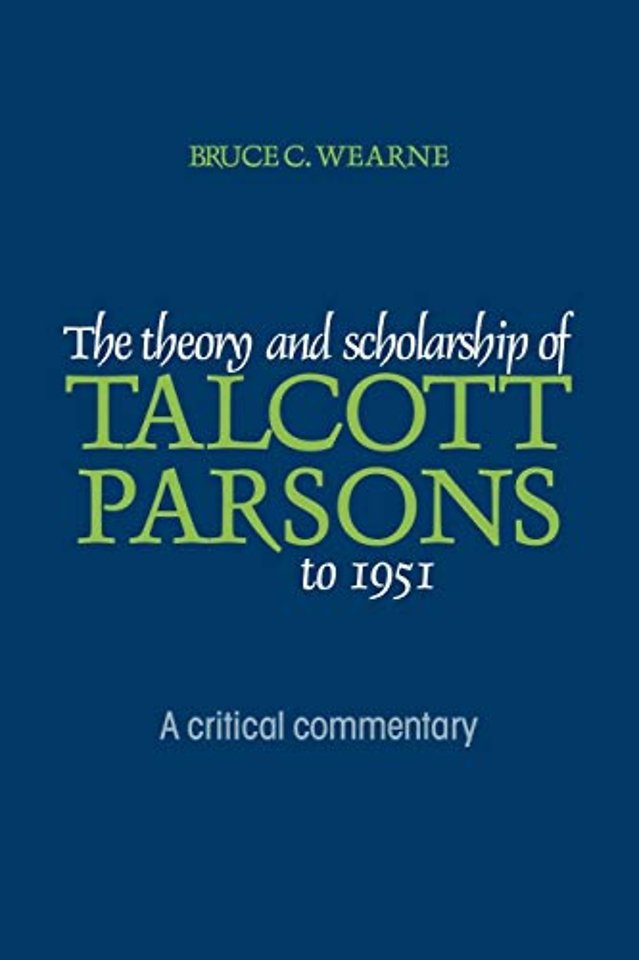
The Theory and Scholarship of Talcott Parsons to 1951
A Critical Commentary
Samenvatting
The most influential sociologist to have emerged in the United States, Talcott Parsons developed a distinctive theoretical synthesis which drew on Weber, Smobart, Durkheim and Marx. He was the moving spirit behind the interdisciplinary Department of Social Relations at Harvard, and he became a central figure in the development of the social sciences in post-war America. Interest in his theories is now reviving, after a period of neglect, and Bruce C. Wearne's study will help a generation of scholars to reassess his work. Drawing on unpublished papers, Wearne describes Parson's religious background and his education and traces the impact of German and other social theory on his development as a scholar. The book concludes with a thorough and fresh reading of his classic work, The Social System.
Specificaties
Inhoudsopgave
Net verschenen
Rubrieken
- aanbestedingsrecht
- aansprakelijkheids- en verzekeringsrecht
- accountancy
- algemeen juridisch
- arbeidsrecht
- bank- en effectenrecht
- bestuursrecht
- bouwrecht
- burgerlijk recht en procesrecht
- europees-internationaal recht
- fiscaal recht
- gezondheidsrecht
- insolventierecht
- intellectuele eigendom en ict-recht
- management
- mens en maatschappij
- milieu- en omgevingsrecht
- notarieel recht
- ondernemingsrecht
- pensioenrecht
- personen- en familierecht
- sociale zekerheidsrecht
- staatsrecht
- strafrecht en criminologie
- vastgoed- en huurrecht
- vreemdelingenrecht