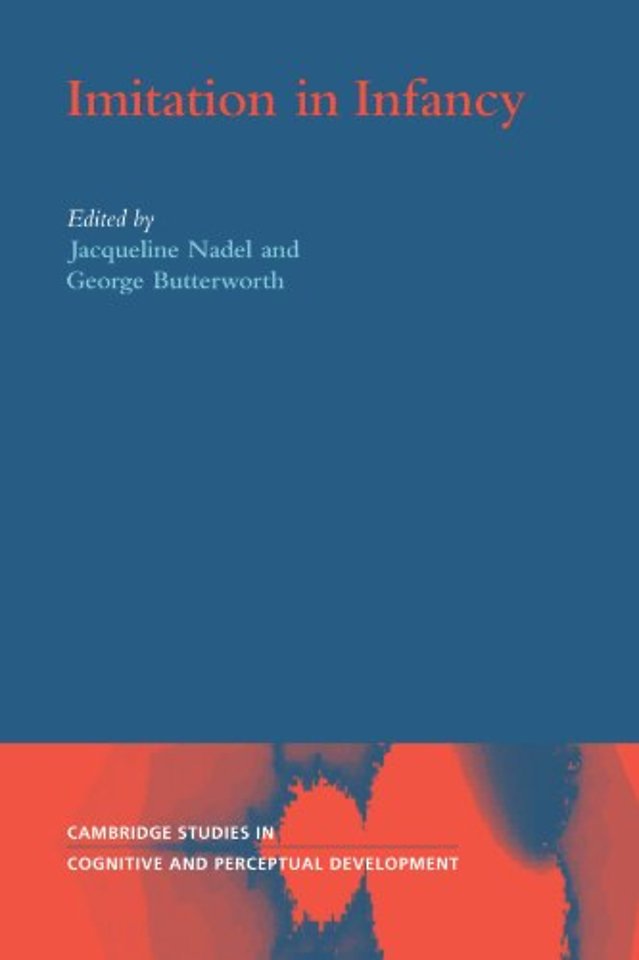
Imitation in Infancy
Samenvatting
First published in 1999, this book brings together the extensive modern evidence for innate imitation in babies. Modern research has shown imitation to be a natural mechanism of learning and communication which deserves to be at centre stage in developmental psychology. Yet the very possibility of imitation in newborn humans has had a controversial history. Defining imitation has proved to be far from straightforward and scientific evidence for its existence in neonates is only now becoming accepted, despite more than a century of enquiry. In this book, some of the world's foremost researchers on imitation and intellectual development review evidence for imitation in newborn babies. They discuss the development of imitation in infancy, in both normal and atypical populations and in comparison with other primate species, stressing the fundamental importance of imitation in human development, as a foundation of communication and a precursor to symbolic processes.
Specificaties
Inhoudsopgave
Net verschenen
Rubrieken
- aanbestedingsrecht
- aansprakelijkheids- en verzekeringsrecht
- accountancy
- algemeen juridisch
- arbeidsrecht
- bank- en effectenrecht
- bestuursrecht
- bouwrecht
- burgerlijk recht en procesrecht
- europees-internationaal recht
- fiscaal recht
- gezondheidsrecht
- insolventierecht
- intellectuele eigendom en ict-recht
- management
- mens en maatschappij
- milieu- en omgevingsrecht
- notarieel recht
- ondernemingsrecht
- pensioenrecht
- personen- en familierecht
- sociale zekerheidsrecht
- staatsrecht
- strafrecht en criminologie
- vastgoed- en huurrecht
- vreemdelingenrecht