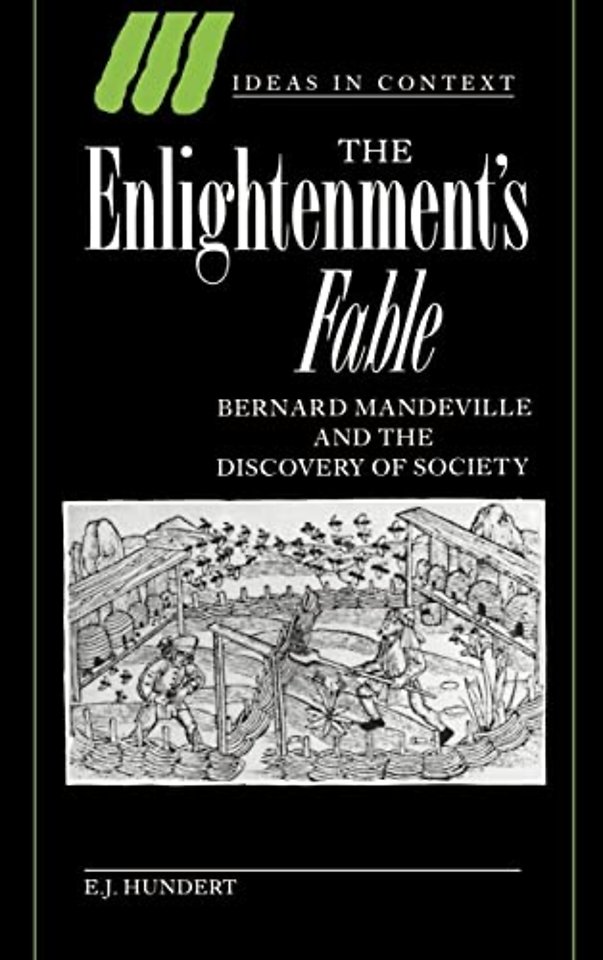
The Enlightenment's Fable
Bernard Mandeville and the Discovery of Society
Samenvatting
The apprehension of society as an aggregation of self-interested individuals, connected only by bonds of envy, competition, and exploitation, is a dominant modern concern, but one first systematically articulated during the European Enlightenment. The Enlightenment's 'Fable' approaches this problem from the perspective of the challenge offered to inherited traditions of morality and social understanding by the Anglo-Dutch physician, satirist and philosopher, Bernard Mandeville. Mandeville's infamous paradoxical maxim 'private vices, public benefits' profoundly disturbed his contemporaries, while his Fable of the Bees had a decisive influence on David Hume, Jean-Jacques Rousseau, Adam Smith and Immanuel Kant. Professor Hundert examines the sources and strategies of Mandeville's science of human nature and the role of his ideas in shaping eighteenth century economic, social and moral theories.
Specificaties
Inhoudsopgave
Net verschenen
Rubrieken
- aanbestedingsrecht
- aansprakelijkheids- en verzekeringsrecht
- accountancy
- algemeen juridisch
- arbeidsrecht
- bank- en effectenrecht
- bestuursrecht
- bouwrecht
- burgerlijk recht en procesrecht
- europees-internationaal recht
- fiscaal recht
- gezondheidsrecht
- insolventierecht
- intellectuele eigendom en ict-recht
- management
- mens en maatschappij
- milieu- en omgevingsrecht
- notarieel recht
- ondernemingsrecht
- pensioenrecht
- personen- en familierecht
- sociale zekerheidsrecht
- staatsrecht
- strafrecht en criminologie
- vastgoed- en huurrecht
- vreemdelingenrecht