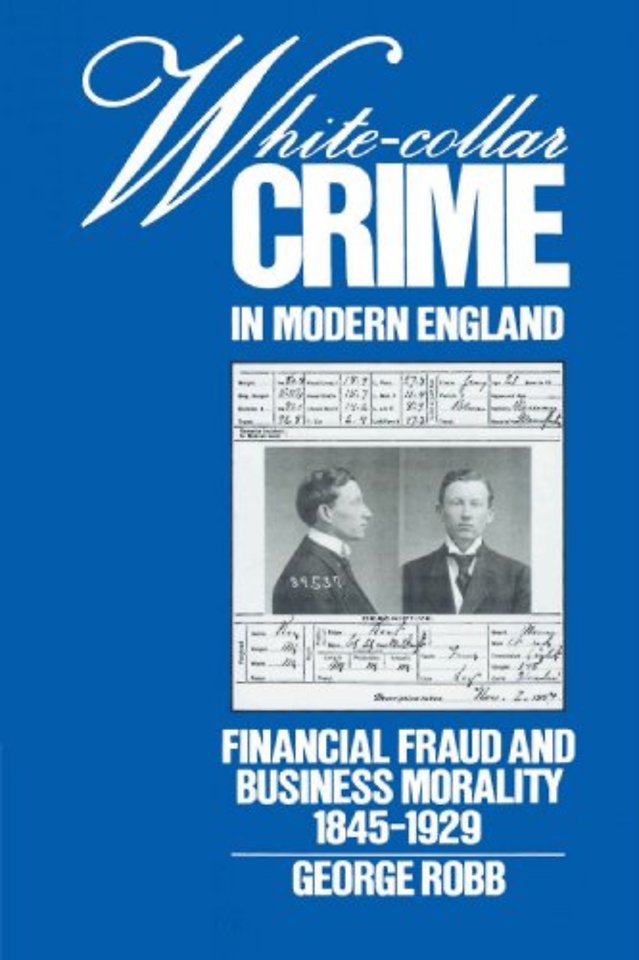
White-Collar Crime in Modern England
Financial Fraud and Business Morality, 1845–1929
Samenvatting
In the period between the 1840s and the 1920s the British economy was transformed, from small-scale capitalism dominated by individual traders and partnerships to a complex financial structure dominated by large, joint-stock companies. The tremendous growth of big business created a world of new opportunities for criminal exploitation. The promotion and management of public companies and the trading of commercial securities proved vulnerable to the white-collar crimes of fraud and embezzlement. Problems of financial fraud were exacerbated by a climate of laissez-faire which championed the most permissive commercial legislation in the world, and white-collar crime wreaked havoc on the modern British economy. This new book examines the spread of white-collar crime from the Victorian period to the early twentieth century and offers a new perspective on modern scandals.
Specificaties
Inhoudsopgave
Net verschenen
Rubrieken
- aanbestedingsrecht
- aansprakelijkheids- en verzekeringsrecht
- accountancy
- algemeen juridisch
- arbeidsrecht
- bank- en effectenrecht
- bestuursrecht
- bouwrecht
- burgerlijk recht en procesrecht
- europees-internationaal recht
- fiscaal recht
- gezondheidsrecht
- insolventierecht
- intellectuele eigendom en ict-recht
- management
- mens en maatschappij
- milieu- en omgevingsrecht
- notarieel recht
- ondernemingsrecht
- pensioenrecht
- personen- en familierecht
- sociale zekerheidsrecht
- staatsrecht
- strafrecht en criminologie
- vastgoed- en huurrecht
- vreemdelingenrecht