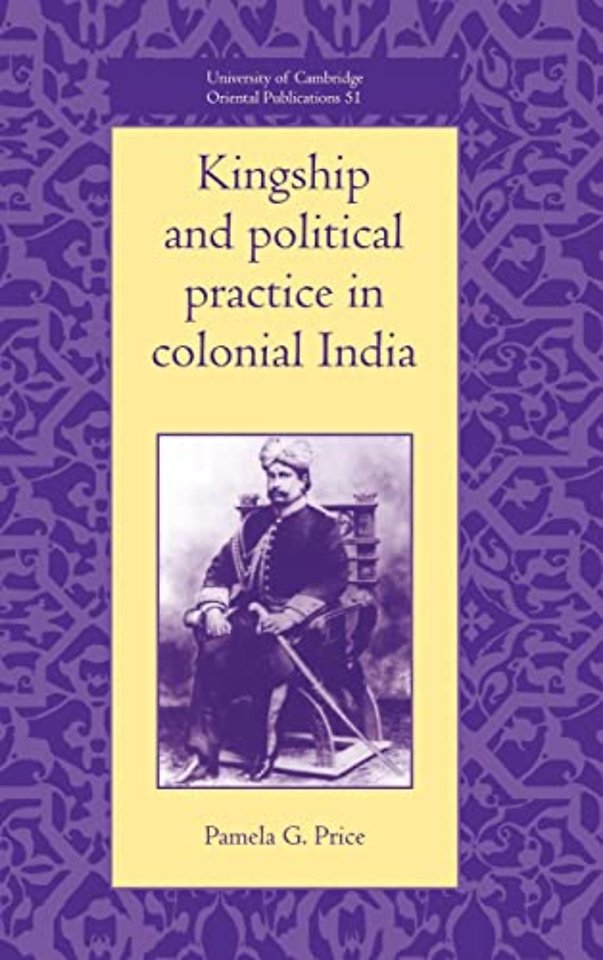
Kingship and Political Practice in Colonial India
Samenvatting
In this 1996 cultural history which considers the transformation of south Indian institutions under British colonial rule in the nineteenth century, Pamela Price focuses on the two former 'little kingdoms' of Ramnad and Sivaganga which came under colonial governance as revenue estates. She demonstrates how rivalries among the royal families and major zamindari temples, and the disintegration of indigenous institutions of rule, contributed to the development of nationalism and identity amongst the people of southern Tamil country. The author also shows how religious symbols and practices going back to the seventeenth century were reformulated and acquired a new significance in the colonial context. Arguing for a reappraisal of the relationship of Hinduism to politics, Price finds that these symbols and practices continue to inform popular expectation of political leadership today.
Specificaties
Inhoudsopgave
Net verschenen
Rubrieken
- aanbestedingsrecht
- aansprakelijkheids- en verzekeringsrecht
- accountancy
- algemeen juridisch
- arbeidsrecht
- bank- en effectenrecht
- bestuursrecht
- bouwrecht
- burgerlijk recht en procesrecht
- europees-internationaal recht
- fiscaal recht
- gezondheidsrecht
- insolventierecht
- intellectuele eigendom en ict-recht
- management
- mens en maatschappij
- milieu- en omgevingsrecht
- notarieel recht
- ondernemingsrecht
- pensioenrecht
- personen- en familierecht
- sociale zekerheidsrecht
- staatsrecht
- strafrecht en criminologie
- vastgoed- en huurrecht
- vreemdelingenrecht