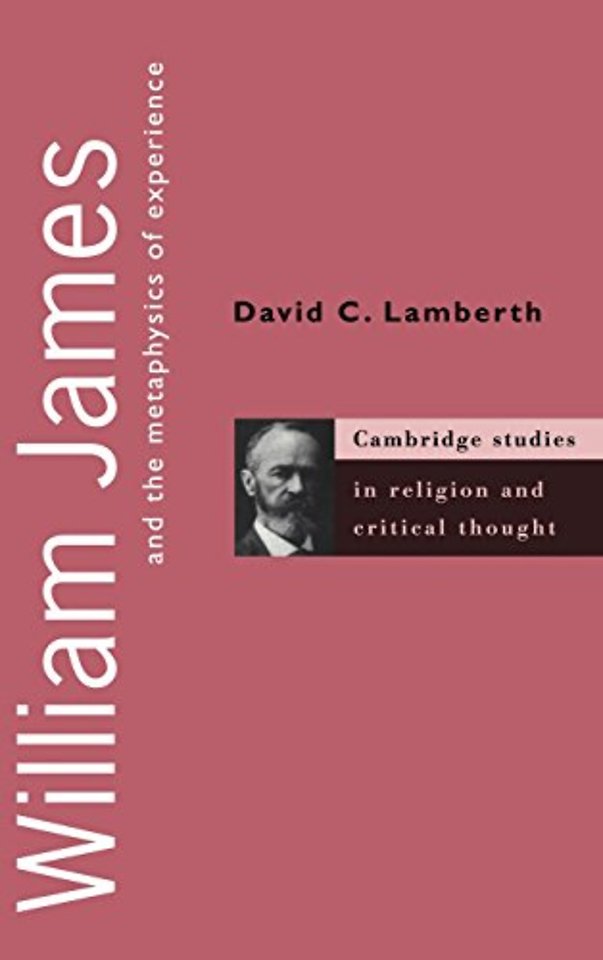
William James and the Metaphysics of Experience
Samenvatting
William James is frequently considered one of America's most important philosophers, as well as a foundational thinker for the study of religion. Despite his reputation as the founder of pragmatism, he is rarely considered a serious philosopher or religious thinker. In this new interpretation David Lamberth argues that James's major contribution was to develop a systematic metaphysics of experience integrally related to his developing pluralistic and social religious ideas. Lamberth systematically interprets James's radically empiricist world-view and argues for an early dating (1895) for his commitment to the metaphysics of radical empiricism. He offers a close reading of Varieties of Religious Experience; and concludes by connecting James's ideas about experience, pluralism and truth to current debates in philosophy, the philosophy of religion, and theology, suggesting James's functional, experiential metaphysics as a conceptual aid in bridging the social and interpretive with the immediate and concrete while avoiding naive realism.
Specificaties
Inhoudsopgave
Net verschenen
Rubrieken
- aanbestedingsrecht
- aansprakelijkheids- en verzekeringsrecht
- accountancy
- algemeen juridisch
- arbeidsrecht
- bank- en effectenrecht
- bestuursrecht
- bouwrecht
- burgerlijk recht en procesrecht
- europees-internationaal recht
- fiscaal recht
- gezondheidsrecht
- insolventierecht
- intellectuele eigendom en ict-recht
- management
- mens en maatschappij
- milieu- en omgevingsrecht
- notarieel recht
- ondernemingsrecht
- pensioenrecht
- personen- en familierecht
- sociale zekerheidsrecht
- staatsrecht
- strafrecht en criminologie
- vastgoed- en huurrecht
- vreemdelingenrecht