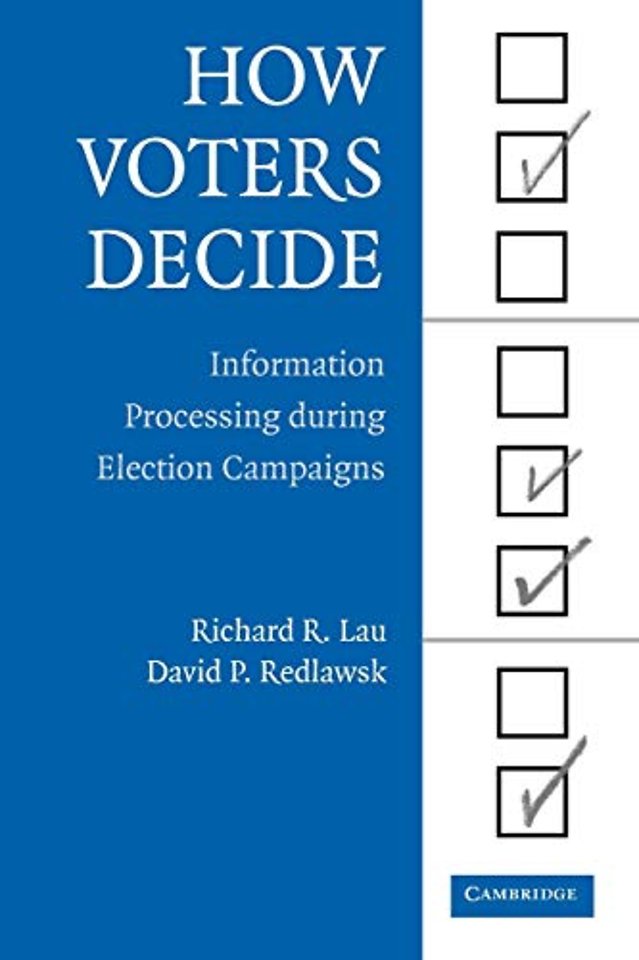
How Voters Decide
Information Processing in Election Campaigns
Samenvatting
This book attempts to redirect the field of voting behavior research by proposing a paradigm-shifting framework for studying voter decision making. An innovative experimental methodology is presented for getting 'inside the heads' of citizens as they confront the overwhelming rush of information from modern presidential election campaigns. Four broad theoretically-defined types of decision strategies that voters employ to help decide which candidate to support are described and operationally-defined. Individual and campaign-related factors that lead voters to adopt one or another of these strategies are examined. Most importantly, this research proposes a new normative focus for the scientific study of voting behavior: we should care about not just which candidate received the most votes, but also how many citizens voted correctly - that is, in accordance with their own fully-informed preferences.
Specificaties
Inhoudsopgave
Net verschenen
Rubrieken
- aanbestedingsrecht
- aansprakelijkheids- en verzekeringsrecht
- accountancy
- algemeen juridisch
- arbeidsrecht
- bank- en effectenrecht
- bestuursrecht
- bouwrecht
- burgerlijk recht en procesrecht
- europees-internationaal recht
- fiscaal recht
- gezondheidsrecht
- insolventierecht
- intellectuele eigendom en ict-recht
- management
- mens en maatschappij
- milieu- en omgevingsrecht
- notarieel recht
- ondernemingsrecht
- pensioenrecht
- personen- en familierecht
- sociale zekerheidsrecht
- staatsrecht
- strafrecht en criminologie
- vastgoed- en huurrecht
- vreemdelingenrecht