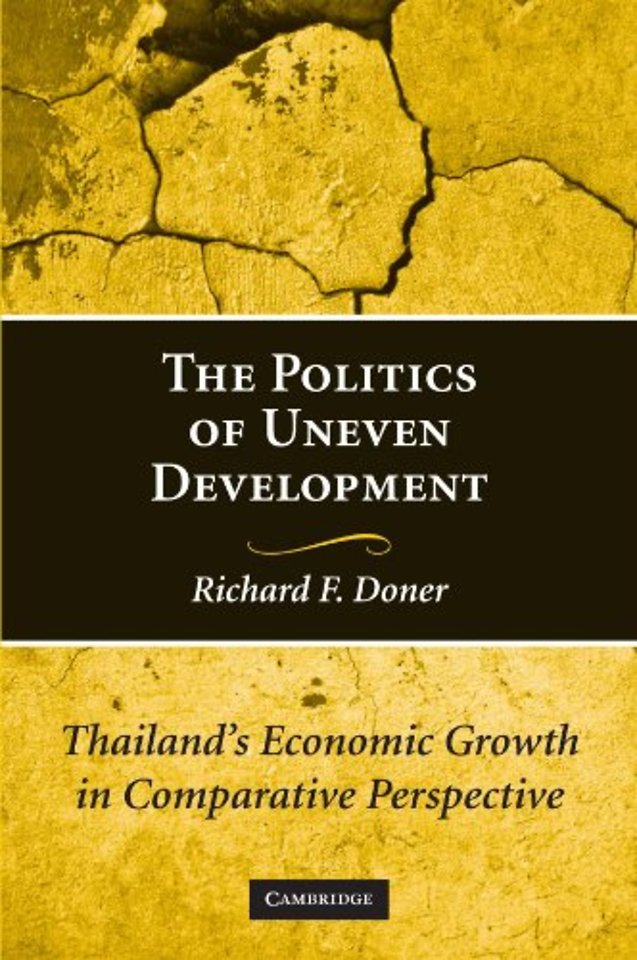
The Politics of Uneven Development
Thailand's Economic Growth in Comparative Perspective
Samenvatting
Why do some middle-income countries diversify their economies but fail to upgrade – to produce world-class products based on local inputs and technological capacities? Why have the 'little tigers' of Southeast Asia, such as Thailand, continued to lag behind the Newly Industrializing Countries of East Asia? Richard Doner goes beyond 'political will' by emphasizing institutional capacities and political pressures: development challenges vary; upgrading poses tough challenges that require robust institutional capacities. Such strengths are political in origin. They reflect pressures, such as security threats and resource constraints, which motivate political leaders to focus on efficiency more than clientelist payoffs. Such pressures help to explain the political institutions – 'veto players' – through which leaders operate. Doner assesses this argument by analyzing Thai development historically, in three sectors (sugar, textiles, and autos) and in comparison with both weaker and stronger competitors (Philippines, Indonesia, Taiwan, Brazil, and South Korea).
Specificaties
Inhoudsopgave
Net verschenen
Rubrieken
- aanbestedingsrecht
- aansprakelijkheids- en verzekeringsrecht
- accountancy
- algemeen juridisch
- arbeidsrecht
- bank- en effectenrecht
- bestuursrecht
- bouwrecht
- burgerlijk recht en procesrecht
- europees-internationaal recht
- fiscaal recht
- gezondheidsrecht
- insolventierecht
- intellectuele eigendom en ict-recht
- management
- mens en maatschappij
- milieu- en omgevingsrecht
- notarieel recht
- ondernemingsrecht
- pensioenrecht
- personen- en familierecht
- sociale zekerheidsrecht
- staatsrecht
- strafrecht en criminologie
- vastgoed- en huurrecht
- vreemdelingenrecht