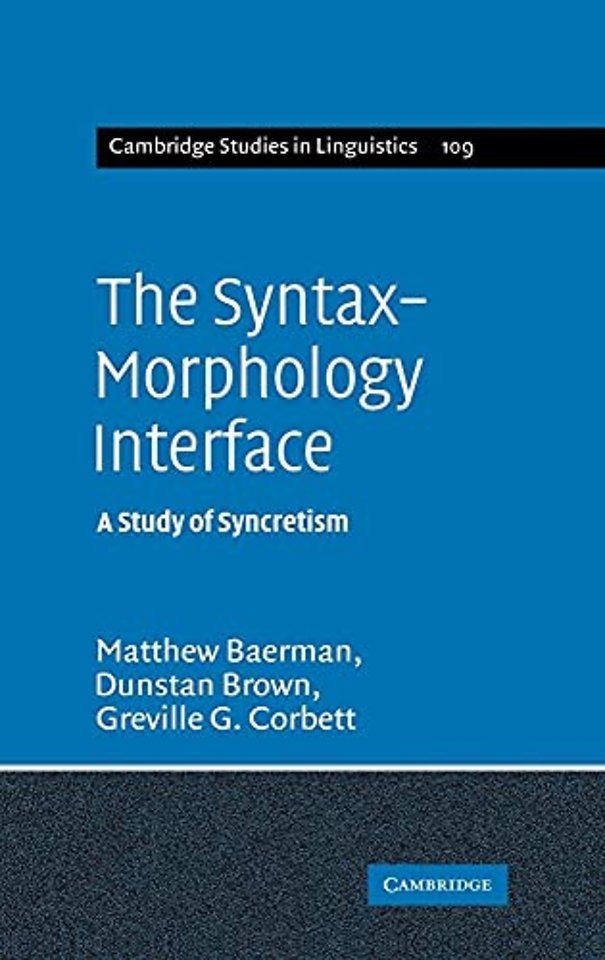
The Syntax-Morphology Interface
A Study of Syncretism
Samenvatting
Syncretism - where a single form serves two or more morphosyntactic functions - is a persistent problem at the syntax-morphology interface. It results from a 'mismatch' whereby the syntax of a language makes a particular distinction but the morphology does not. This pioneering book provides a full-length study of inflectional syncretism, presenting a typology of its occurrence across a wide range of languages. The implications of syncretism for the syntax-morphology interface have long been recognised: it argues either for an enriched model of feature structure (thereby preserving a direct link between function and form), or for the independence of morphological structure from syntactic structure. This book presents a compelling argument for the autonomy of morphology and the resulting analysis is illustrated in a series of formal case studies within Network Morphology. It will be welcomed by all linguists interested in the relation between words and the larger units of which they are a part.
Specificaties
Inhoudsopgave
Net verschenen
Rubrieken
- aanbestedingsrecht
- aansprakelijkheids- en verzekeringsrecht
- accountancy
- algemeen juridisch
- arbeidsrecht
- bank- en effectenrecht
- bestuursrecht
- bouwrecht
- burgerlijk recht en procesrecht
- europees-internationaal recht
- fiscaal recht
- gezondheidsrecht
- insolventierecht
- intellectuele eigendom en ict-recht
- management
- mens en maatschappij
- milieu- en omgevingsrecht
- notarieel recht
- ondernemingsrecht
- pensioenrecht
- personen- en familierecht
- sociale zekerheidsrecht
- staatsrecht
- strafrecht en criminologie
- vastgoed- en huurrecht
- vreemdelingenrecht