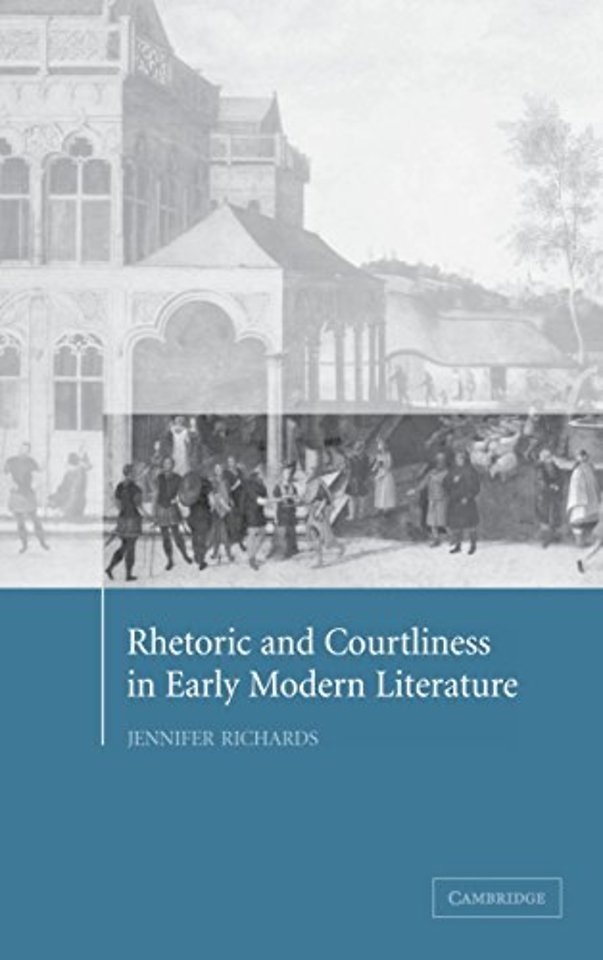
Rhetoric and Courtliness in Early Modern Literature
Samenvatting
Rhetoric and Courtliness in Early Modern Literature explores the early modern interest in conversation as a newly identified art. Conversation was widely accepted to have been inspired by the republican philosopher Cicero. Recognizing his influence on courtesy literature - the main source for 'civil conversation' - Jennifer Richards uncovers alternative ways of thinking about humanism as a project of linguistic and social reform. She argues that humanists explored styles of conversation to reform the manner of association between male associates; teachers and students, buyers and sellers, and settlers and colonial others. They reconsidered the meaning of 'honesty' in social interchange in an attempt to represent the tension between self-interest and social duty. Richards explores the interest in civil conversation among mid-Tudor humanists, John Cheke, Thomas Smith and Roger Ascham, as well as their self-styled successors, Gabriel Harvey and Edmund Spenser.
Specificaties
Inhoudsopgave
Net verschenen
Rubrieken
- aanbestedingsrecht
- aansprakelijkheids- en verzekeringsrecht
- accountancy
- algemeen juridisch
- arbeidsrecht
- bank- en effectenrecht
- bestuursrecht
- bouwrecht
- burgerlijk recht en procesrecht
- europees-internationaal recht
- fiscaal recht
- gezondheidsrecht
- insolventierecht
- intellectuele eigendom en ict-recht
- management
- mens en maatschappij
- milieu- en omgevingsrecht
- notarieel recht
- ondernemingsrecht
- pensioenrecht
- personen- en familierecht
- sociale zekerheidsrecht
- staatsrecht
- strafrecht en criminologie
- vastgoed- en huurrecht
- vreemdelingenrecht