
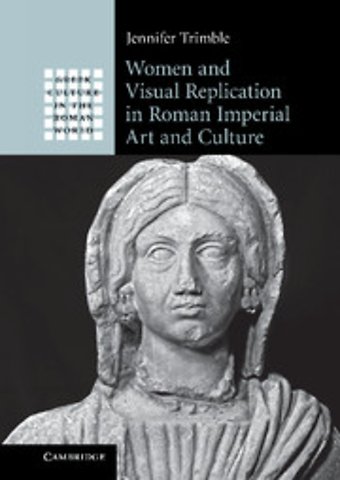
Women and Visual Replication in Roman Imperial Art and Culture
Samenvatting
Why did Roman portrait statues, famed for their individuality, repeatedly employ the same body forms? The complex issue of the Roman copying of Greek 'originals' has so far been studied primarily from a formal and aesthetic viewpoint. Jennifer Trimble takes a broader perspective, considering archaeological, social historical and economic factors, and examines how these statues were made, bought and seen. To understand how Roman visual replication worked, Trimble focuses on the 'Large Herculaneum Woman' statue type, a draped female body particularly common in the second century CE and surviving in about two hundred examples, to assess how sameness helped to communicate a woman's social identity. She demonstrates how visual replication in the Roman Empire thus emerged as a means of constructing social power and articulating dynamic tensions between empire and individual localities.
Specificaties
Inhoudsopgave
Net verschenen
Rubrieken
- aanbestedingsrecht
- aansprakelijkheids- en verzekeringsrecht
- accountancy
- algemeen juridisch
- arbeidsrecht
- bank- en effectenrecht
- bestuursrecht
- bouwrecht
- burgerlijk recht en procesrecht
- europees-internationaal recht
- fiscaal recht
- gezondheidsrecht
- insolventierecht
- intellectuele eigendom en ict-recht
- management
- mens en maatschappij
- milieu- en omgevingsrecht
- notarieel recht
- ondernemingsrecht
- pensioenrecht
- personen- en familierecht
- sociale zekerheidsrecht
- staatsrecht
- strafrecht en criminologie
- vastgoed- en huurrecht
- vreemdelingenrecht