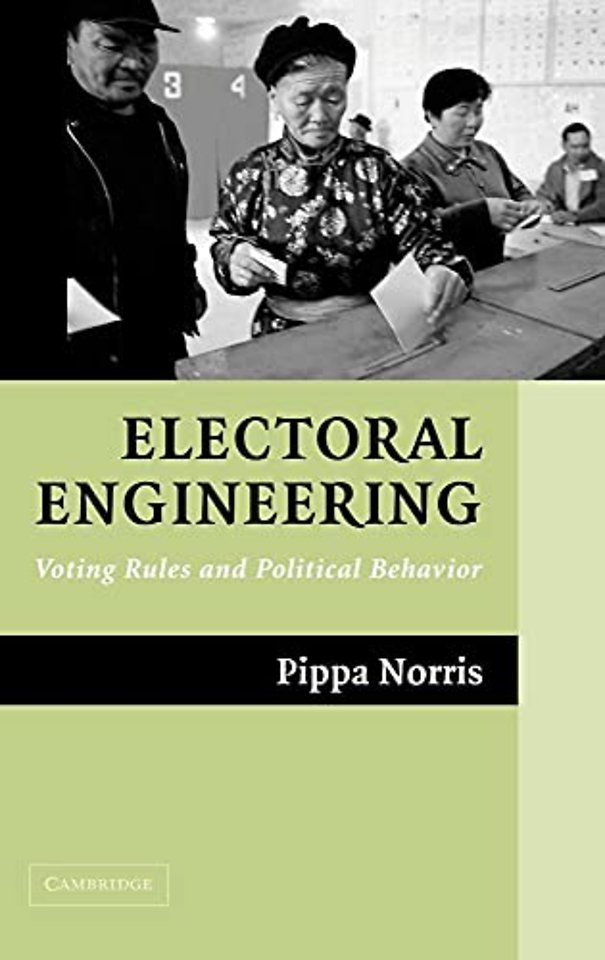
Electoral Engineering
Voting Rules and Political Behavior
Samenvatting
From Kosovo to Kabul, the last decade witnessed growing interest in ?electoral engineering?. Reformers have sought to achieve either greater government accountability through majoritarian arrangements or wider parliamentary diversity through proportional formula. Underlying the normative debates are important claims about the impact and consequences of electoral reform for political representation and voting behavior. The study compares and evaluates two broad schools of thought, each offering contracting expectations. One popular approach claims that formal rules define electoral incentives facing parties, politicians and citizens. By changing these rules, rational choice institutionalism claims that we have the capacity to shape political behavior. Alternative cultural modernization theories differ in their emphasis on the primary motors driving human behavior, their expectations about the pace of change, and also their assumptions about the ability of formal institutional rules to alter, rather than adapt to, deeply embedded and habitual social norms and patterns of human behavior.
Specificaties
Inhoudsopgave
Net verschenen
Rubrieken
- aanbestedingsrecht
- aansprakelijkheids- en verzekeringsrecht
- accountancy
- algemeen juridisch
- arbeidsrecht
- bank- en effectenrecht
- bestuursrecht
- bouwrecht
- burgerlijk recht en procesrecht
- europees-internationaal recht
- fiscaal recht
- gezondheidsrecht
- insolventierecht
- intellectuele eigendom en ict-recht
- management
- mens en maatschappij
- milieu- en omgevingsrecht
- notarieel recht
- ondernemingsrecht
- pensioenrecht
- personen- en familierecht
- sociale zekerheidsrecht
- staatsrecht
- strafrecht en criminologie
- vastgoed- en huurrecht
- vreemdelingenrecht