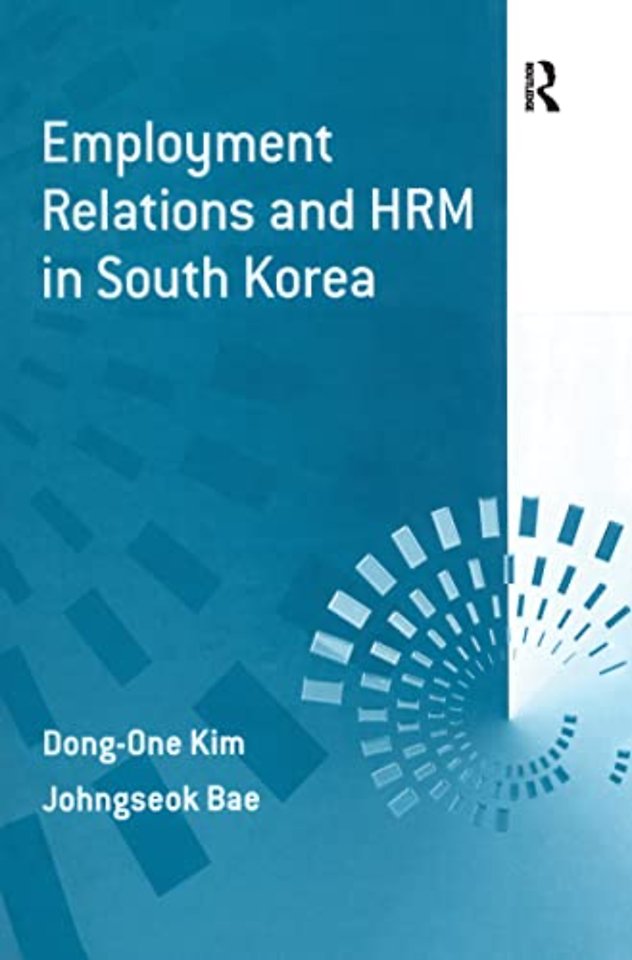
Employment Relations and HRM in South Korea
Samenvatting
South Korea is one of the rare countries that has experienced political/industrial democratization and economic development simultaneously in a relatively short period. However, the full story of democratization and development processes displays two faces - positive and negative aspects to the deployment of labour/human resources. This book explains these seemingly contradictory outcomes of Korean employment relations (ER) and human resource management (HRM) based upon a theoretical framework that incorporates logics of environmental constraints and strategies of actors. During three key periods of the previous century (i.e., pre-1987, 1987 - 1997 and post-1997), the book discusses the paradigm shift in both ER and HRM. This much-needed text contains informative details on Korean ER and HRM of past and present, with theoretical and practical views, and of transformations and continuities. The book provides policy implications that will stimulate constructive debates regarding the mutual-gains strategies for policy makers, management and employees.
Specificaties
Net verschenen
Rubrieken
- aanbestedingsrecht
- aansprakelijkheids- en verzekeringsrecht
- accountancy
- algemeen juridisch
- arbeidsrecht
- bank- en effectenrecht
- bestuursrecht
- bouwrecht
- burgerlijk recht en procesrecht
- europees-internationaal recht
- fiscaal recht
- gezondheidsrecht
- insolventierecht
- intellectuele eigendom en ict-recht
- management
- mens en maatschappij
- milieu- en omgevingsrecht
- notarieel recht
- ondernemingsrecht
- pensioenrecht
- personen- en familierecht
- sociale zekerheidsrecht
- staatsrecht
- strafrecht en criminologie
- vastgoed- en huurrecht
- vreemdelingenrecht