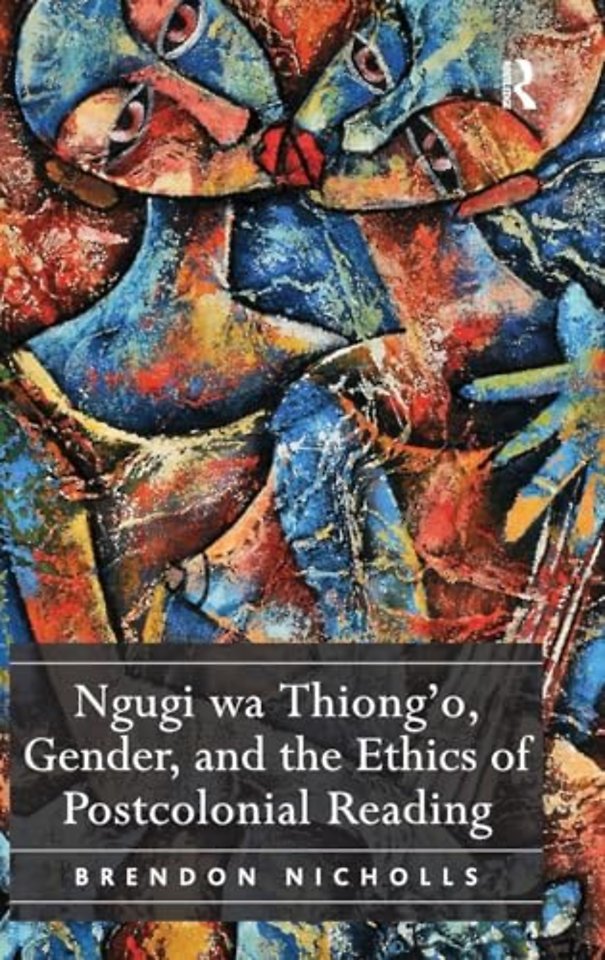
Ngugi wa Thiong’o, Gender, and the Ethics of Postcolonial Reading
Samenvatting
This is the first comprehensive book-length study of gender politics in Ngugi wa Thiong'o's fiction. Brendon Nicholls argues that mechanisms of gender subordination are strategically crucial to Ngugi's ideological project from his first novel to his most recent one. Nicholls describes the historical pressures that lead Ngugi to represent women as he does, and shows that the novels themselves are symptomatic of the cultural conditions that they address. Reading Ngugi's fiction in terms of its Gikuyu allusions and references, a gendered narrative of history emerges that creates transgressive spaces for women. Nicholls bases his discussion on moments during the Mau Mau rebellion when women's contributions to the anticolonial struggle could not be reduced to a patriarchal narrative of Kenyan history, and this interpretive maneuver permits a reading of Ngugi's fiction that accommodates female political and sexual agency. Nicholls contributes to postcolonial theory by proposing a methodology for reading cultural difference. This methodology critiques cultural practices like clitoridectomy in an ethical manner that seeks to avoid both cultural imperialism and cultural relativisim. His strategy of 'performative reading,' that is, making the conditions of one text (such as folklore, history, or translation) active in another (for example, fiction, literary narrative, or nationalism), makes possible an ethical reading of gender and of the conditions of reading in translation.
Specificaties
Net verschenen
Rubrieken
- aanbestedingsrecht
- aansprakelijkheids- en verzekeringsrecht
- accountancy
- algemeen juridisch
- arbeidsrecht
- bank- en effectenrecht
- bestuursrecht
- bouwrecht
- burgerlijk recht en procesrecht
- europees-internationaal recht
- fiscaal recht
- gezondheidsrecht
- insolventierecht
- intellectuele eigendom en ict-recht
- management
- mens en maatschappij
- milieu- en omgevingsrecht
- notarieel recht
- ondernemingsrecht
- pensioenrecht
- personen- en familierecht
- sociale zekerheidsrecht
- staatsrecht
- strafrecht en criminologie
- vastgoed- en huurrecht
- vreemdelingenrecht