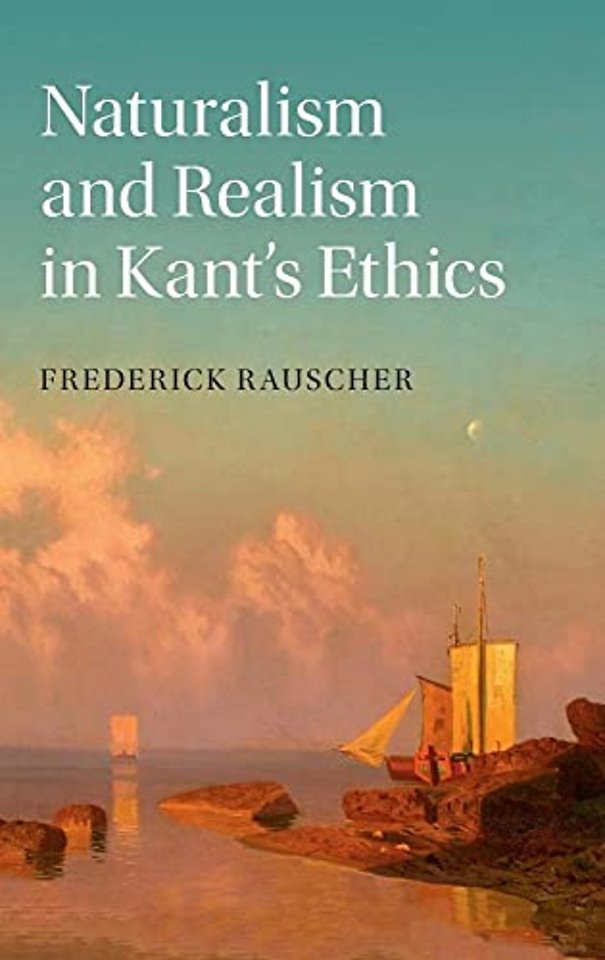
Naturalism and Realism in Kant's Ethics
Samenvatting
In this comprehensive assessment of Kant's metaethics, Frederick Rauscher shows that Kant is a moral idealist rather than a moral realist and argues that Kant's ethics does not require metaphysical commitments that go beyond nature. Rauscher frames the argument in the context of Kant's non-naturalistic philosophical method and the character of practical reason as action-oriented. Reason operates entirely within nature, and apparently non-natural claims - God, free choice, and value - are shown to be heuristic and to reflect reason's ordering of nature. The book shows how Kant hesitates between a transcendental moral idealism with an empirical moral realism and a complete moral idealism. Examining every aspect of Kant's ethics, from the categorical imperative to freedom and value, this volume argues that Kant's focus on human moral agency explains morality as a part of nature. It will appeal to academic researchers and advanced students of Kant, German idealism and intellectual history.
Specificaties
Inhoudsopgave
Net verschenen
Rubrieken
- aanbestedingsrecht
- aansprakelijkheids- en verzekeringsrecht
- accountancy
- algemeen juridisch
- arbeidsrecht
- bank- en effectenrecht
- bestuursrecht
- bouwrecht
- burgerlijk recht en procesrecht
- europees-internationaal recht
- fiscaal recht
- gezondheidsrecht
- insolventierecht
- intellectuele eigendom en ict-recht
- management
- mens en maatschappij
- milieu- en omgevingsrecht
- notarieel recht
- ondernemingsrecht
- pensioenrecht
- personen- en familierecht
- sociale zekerheidsrecht
- staatsrecht
- strafrecht en criminologie
- vastgoed- en huurrecht
- vreemdelingenrecht