
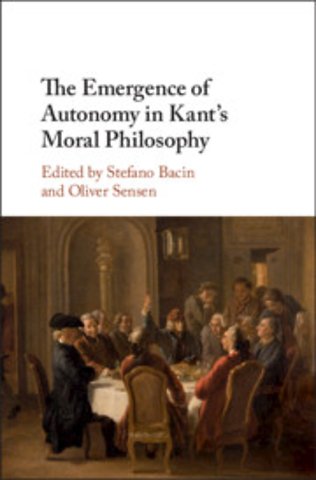
The Emergence of Autonomy in Kant's Moral Philosophy
Samenvatting
Autonomy is one of the central concepts of contemporary moral thought, and Kant is often credited with being the inventor of individual moral autonomy. But how and why did Kant develop this notion? The Emergence of Autonomy in Kant's Moral Philosophy is the first essay collection exclusively devoted to this topic. It traces the emergence of autonomy from Kant's earliest writings to the changes that he made to the concept in his mature works. The essays offer a close historical and philosophical analysis of what prompted Kant to develop his conception of autonomy, charting the historical background which prompted his search, and thoroughly analysing different stages of his writings in order to see which element of autonomy was introduced at which point. The resulting volume will be of interest to both scholars and students of Kantian moral philosophy, as well as to anyone interested in the subject of autonomy.
Specificaties
Inhoudsopgave
Net verschenen
Rubrieken
- aanbestedingsrecht
- aansprakelijkheids- en verzekeringsrecht
- accountancy
- algemeen juridisch
- arbeidsrecht
- bank- en effectenrecht
- bestuursrecht
- bouwrecht
- burgerlijk recht en procesrecht
- europees-internationaal recht
- fiscaal recht
- gezondheidsrecht
- insolventierecht
- intellectuele eigendom en ict-recht
- management
- mens en maatschappij
- milieu- en omgevingsrecht
- notarieel recht
- ondernemingsrecht
- pensioenrecht
- personen- en familierecht
- sociale zekerheidsrecht
- staatsrecht
- strafrecht en criminologie
- vastgoed- en huurrecht
- vreemdelingenrecht