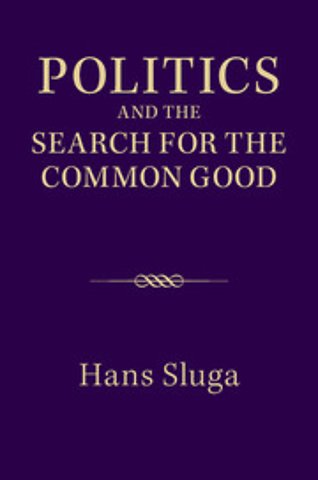
Politics and the Search for the Common Good
Samenvatting
Rethinking politics in a new vocabulary, Hans Sluga challenges the firmly held assumption that there exists a single common good which politics is meant to realize. He argues that politics is not a natural but a historical phenomenon, and not a single thing but a multiplicity of political forms and values only loosely related. He contrasts two traditions in political philosophy: a 'normative theorizing' that extends from Plato to John Rawls and a newer 'diagnostic practice' that emerged with Marx and Nietzsche and has found its three most prominent twentieth-century practitioners in Carl Schmitt, Hannah Arendt, and Michel Foucault. He then examines the sources of diagnostic political thinking, analyzes its achievements, and offers a critical assessment of its limitations. His important book will be of interest to a wide range of upper-level students and scholars in political philosophy, political theory, and the history of ideas.
Specificaties
Inhoudsopgave
Net verschenen
Rubrieken
- aanbestedingsrecht
- aansprakelijkheids- en verzekeringsrecht
- accountancy
- algemeen juridisch
- arbeidsrecht
- bank- en effectenrecht
- bestuursrecht
- bouwrecht
- burgerlijk recht en procesrecht
- europees-internationaal recht
- fiscaal recht
- gezondheidsrecht
- insolventierecht
- intellectuele eigendom en ict-recht
- management
- mens en maatschappij
- milieu- en omgevingsrecht
- notarieel recht
- ondernemingsrecht
- pensioenrecht
- personen- en familierecht
- sociale zekerheidsrecht
- staatsrecht
- strafrecht en criminologie
- vastgoed- en huurrecht
- vreemdelingenrecht