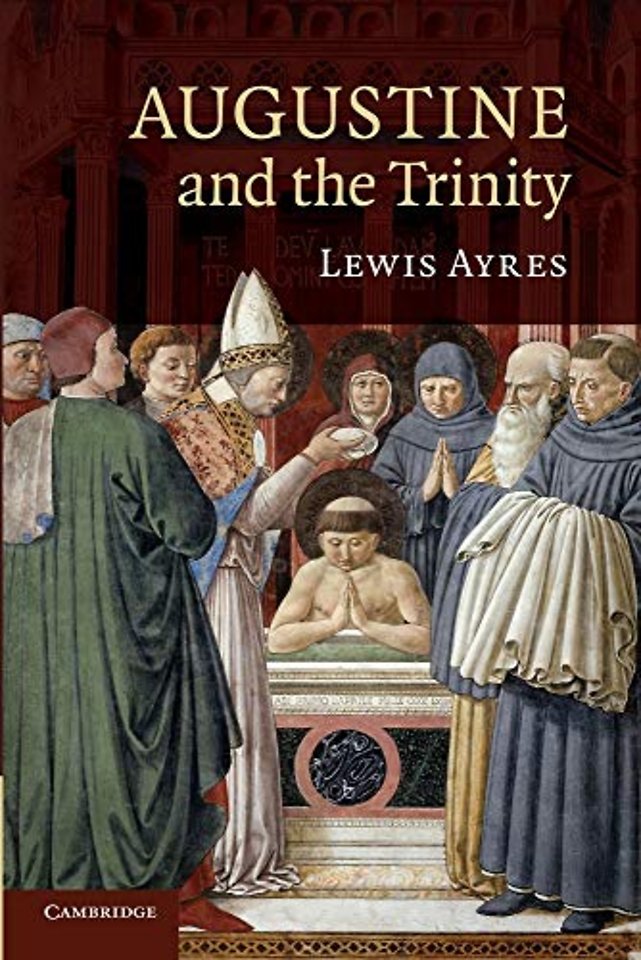
Augustine and the Trinity
Samenvatting
Augustine of Hippo (354–430) strongly influenced western theology, but he has often been accused of over-emphasizing the unity of God to the detriment of the Trinity. In Augustine and the Trinity, Lewis Ayres offers a new treatment of this important figure, demonstrating how Augustine's writings offer one of the most sophisticated early theologies of the Trinity developed after the Council of Nicaea (325). Building on recent research, Ayres argues that Augustine was influenced by a wide variety of earlier Latin Christian traditions which stressed the irreducibility of Father, Son and Spirit. Augustine combines these traditions with material from non-Christian Neoplatonists in a very personal synthesis. Ayres also argues that Augustine shaped a powerful account of Christian ascent toward understanding of, as well as participation in the divine life, one that begins in faith and models itself on Christ's humility.
Specificaties
Inhoudsopgave
Net verschenen
Rubrieken
- aanbestedingsrecht
- aansprakelijkheids- en verzekeringsrecht
- accountancy
- algemeen juridisch
- arbeidsrecht
- bank- en effectenrecht
- bestuursrecht
- bouwrecht
- burgerlijk recht en procesrecht
- europees-internationaal recht
- fiscaal recht
- gezondheidsrecht
- insolventierecht
- intellectuele eigendom en ict-recht
- management
- mens en maatschappij
- milieu- en omgevingsrecht
- notarieel recht
- ondernemingsrecht
- pensioenrecht
- personen- en familierecht
- sociale zekerheidsrecht
- staatsrecht
- strafrecht en criminologie
- vastgoed- en huurrecht
- vreemdelingenrecht