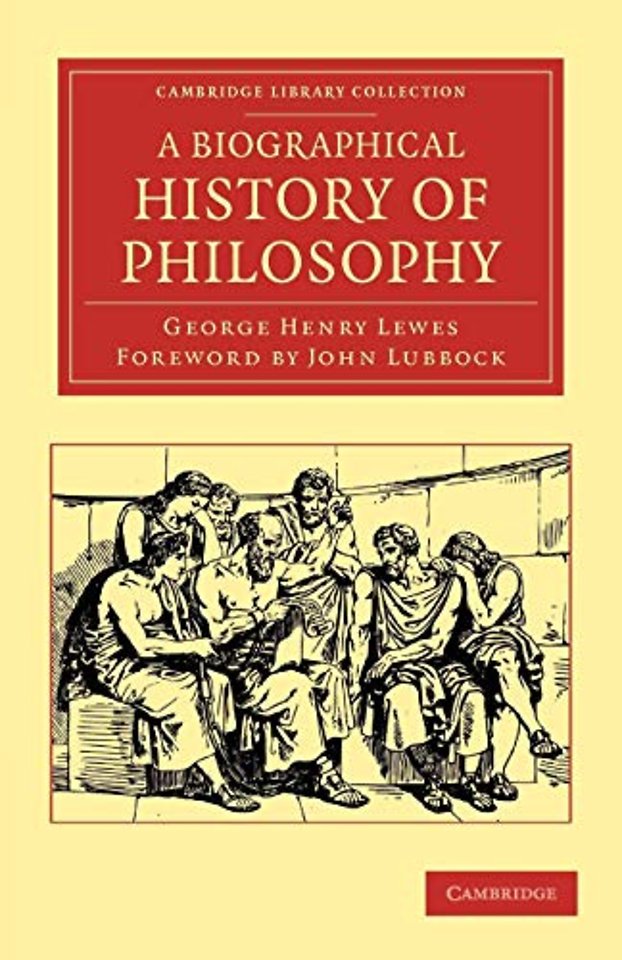
A Biographical History of Philosophy
Samenvatting
The philosopher and critic George Henry Lewes (1817–78) published this work in two volumes in 1845–6. This is a reissue of an 1892 printing, which brought the volumes into one book. Lewes wrote widely on literature, science and philosophy, and was also the long-term intimate companion of George Eliot. This book is a narrative history, rather than an encyclopedia, of key philosophers. It is, therefore, a partial and personal study instead of an exhaustive textbook. The first volume concentrates solely on Greek philosophy, beginning with the Pre-Socratics and ending with the Neo-Platonists. The second volume jumps to Francis Bacon, concentrating on British, German and French philosophy, and addressing, among others, Spinoza, Locke, Hume and Kant, and ending with Auguste Comte. Containing both historical anecdotes and pithy analyses of ideas, this book reflects the expertise and intellectual sympathies of a Victorian polymath.
Specificaties
Inhoudsopgave
Net verschenen
Rubrieken
- aanbestedingsrecht
- aansprakelijkheids- en verzekeringsrecht
- accountancy
- algemeen juridisch
- arbeidsrecht
- bank- en effectenrecht
- bestuursrecht
- bouwrecht
- burgerlijk recht en procesrecht
- europees-internationaal recht
- fiscaal recht
- gezondheidsrecht
- insolventierecht
- intellectuele eigendom en ict-recht
- management
- mens en maatschappij
- milieu- en omgevingsrecht
- notarieel recht
- ondernemingsrecht
- pensioenrecht
- personen- en familierecht
- sociale zekerheidsrecht
- staatsrecht
- strafrecht en criminologie
- vastgoed- en huurrecht
- vreemdelingenrecht