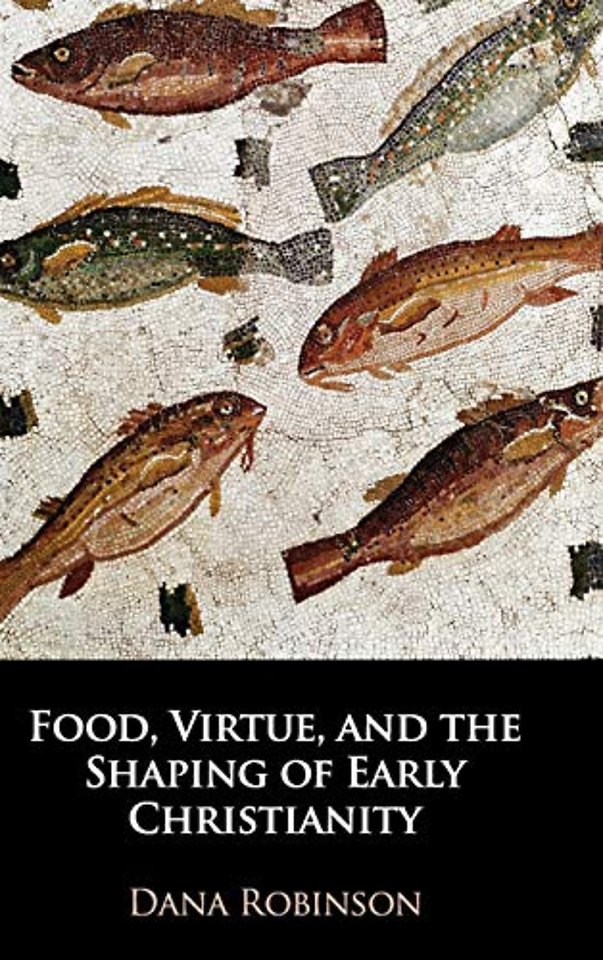
Food, Virtue, and the Shaping of Early Christianity
Samenvatting
In this book, Dana Robinson examines the role that food played in the Christianization of daily life in the fourth century CE. Early Christians used the food culture of the Hellenized Mediterranean world to create and debate compelling models of Christian virtue, and to project Christian ideology onto common domestic practices. Combining theoretical approaches from cognitive linguistics and space/place theory, Robinson shows how metaphors for piety, such as health, fruit, and sacrifice, relied on food-related domains of common knowledge (medicine, agriculture, votive ritual), which in turn generated sophisticated and accessible models of lay discipline and moral formation. She also demonstrates that Christian places and landscapes of piety were socially constructed through meals and food production networks that extended far beyond the Eucharist. Food culture, thus, provided a network of metaphorical concepts and spatial practices that allowed the lay faithful to participate in important debates over Christian living and community formation.
Specificaties
Inhoudsopgave
Net verschenen
Rubrieken
- aanbestedingsrecht
- aansprakelijkheids- en verzekeringsrecht
- accountancy
- algemeen juridisch
- arbeidsrecht
- bank- en effectenrecht
- bestuursrecht
- bouwrecht
- burgerlijk recht en procesrecht
- europees-internationaal recht
- fiscaal recht
- gezondheidsrecht
- insolventierecht
- intellectuele eigendom en ict-recht
- management
- mens en maatschappij
- milieu- en omgevingsrecht
- notarieel recht
- ondernemingsrecht
- pensioenrecht
- personen- en familierecht
- sociale zekerheidsrecht
- staatsrecht
- strafrecht en criminologie
- vastgoed- en huurrecht
- vreemdelingenrecht