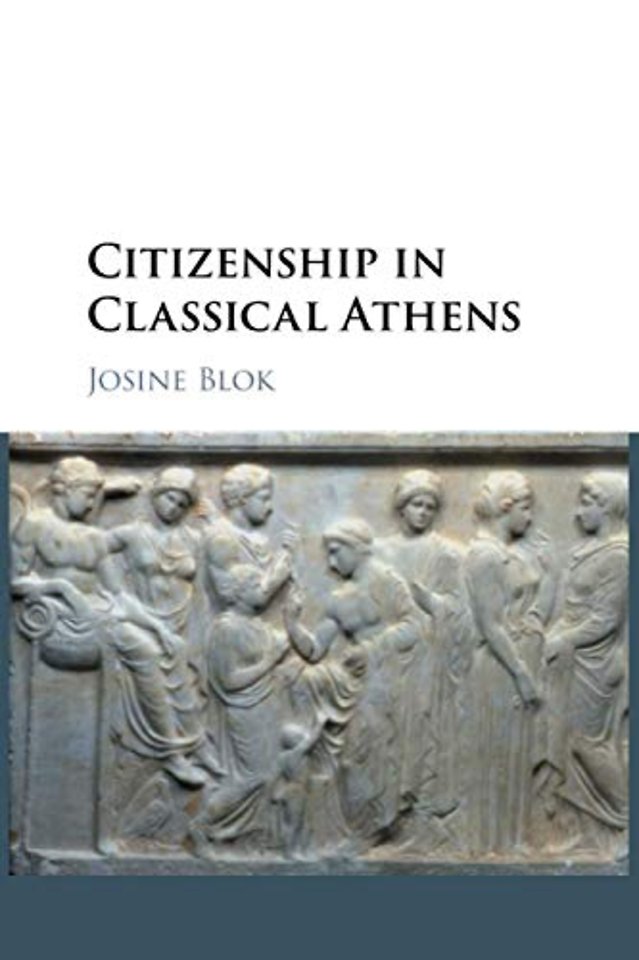
Citizenship in Classical Athens
Samenvatting
What did citizenship really mean in classical Athens? It is conventionally understood as characterised by holding political office. Since only men could do so, only they were considered to be citizens, and the community (polis) has appeared primarily as the scene of men's political actions. However, Athenian law defined citizens not by political office, but by descent. Religion was central to the polis and in this domain, women played prominent public roles. Both men and women were called 'citizens'. On a new reading of the evidence, Josine Blok argues that for the Athenians, their polis was founded on an enduring bond with the gods. Laws anchored the polis' commitments to humans and gods in this bond, transmitted over time to male and female Athenians as equal heirs. All public offices, in various ways and as befitting gender and age, served both the human community and the divine powers protecting Athens.
Specificaties
Inhoudsopgave
Net verschenen
Rubrieken
- aanbestedingsrecht
- aansprakelijkheids- en verzekeringsrecht
- accountancy
- algemeen juridisch
- arbeidsrecht
- bank- en effectenrecht
- bestuursrecht
- bouwrecht
- burgerlijk recht en procesrecht
- europees-internationaal recht
- fiscaal recht
- gezondheidsrecht
- insolventierecht
- intellectuele eigendom en ict-recht
- management
- mens en maatschappij
- milieu- en omgevingsrecht
- notarieel recht
- ondernemingsrecht
- pensioenrecht
- personen- en familierecht
- sociale zekerheidsrecht
- staatsrecht
- strafrecht en criminologie
- vastgoed- en huurrecht
- vreemdelingenrecht