Reshaping Capitalism in Weimar and Nazi Germany
Samenvatting
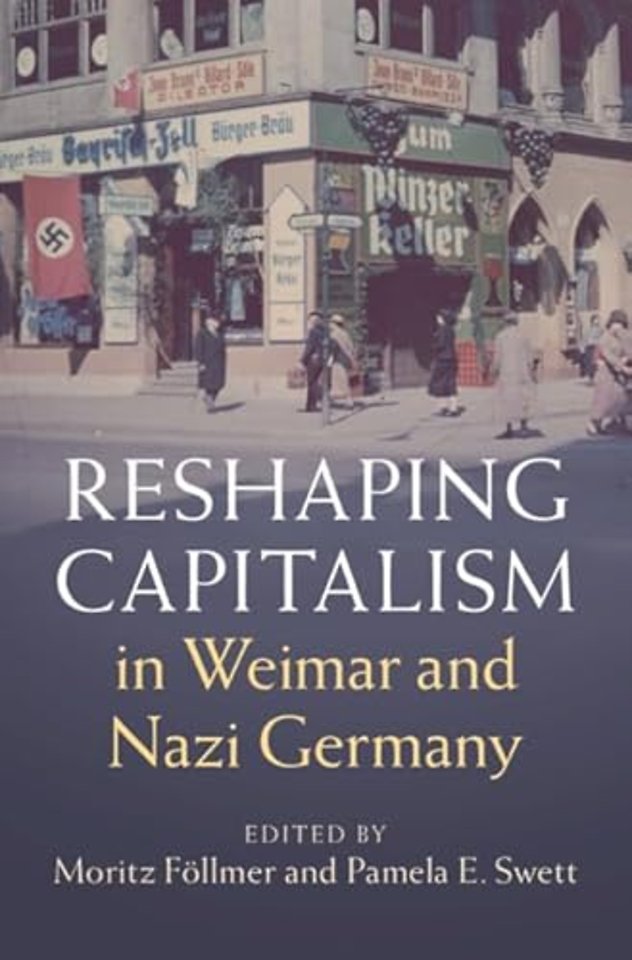
In Weimar and Nazi Germany, capitalism was hotly contested, discreetly practiced, and politically regulated. This volume shows how it adapted to fit a nation undergoing drastic changes following World War I. Through wide-ranging cultural histories, a transatlantic cast of historians probes the ways contemporaries debated, concealed, promoted, and racialized capitalism. They show how bankers and industrialists, storeowners and commercial designers, intellectuals and politicians reshaped a controversial economic order at a time of fundamental uncertainty and drastic rupture. The book thus sheds fresh light on the strategies used by Hitler and his followers to gain and maintain widespread support. The authors conclude that National Socialism succeeded in mobilizing capitalism's energies while at the same time claiming to have overcome a system they identified with pernicious Jewish influences. In so doing, the volume also speaks to the broader issue of how capitalism can adapt to new times.
Specificaties
Inhoudsopgave
Net verschenen
Rubrieken
- aanbestedingsrecht
- aansprakelijkheids- en verzekeringsrecht
- accountancy
- algemeen juridisch
- arbeidsrecht
- bank- en effectenrecht
- bestuursrecht
- bouwrecht
- burgerlijk recht en procesrecht
- europees-internationaal recht
- fiscaal recht
- gezondheidsrecht
- insolventierecht
- intellectuele eigendom en ict-recht
- management
- mens en maatschappij
- milieu- en omgevingsrecht
- notarieel recht
- ondernemingsrecht
- pensioenrecht
- personen- en familierecht
- sociale zekerheidsrecht
- staatsrecht
- strafrecht en criminologie
- vastgoed- en huurrecht
- vreemdelingenrecht