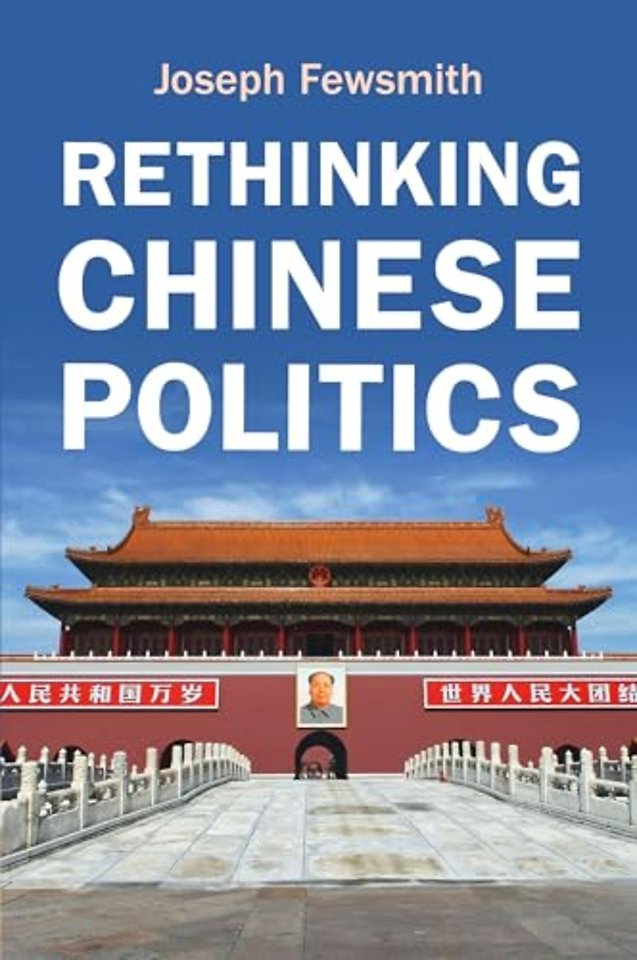
Rethinking Chinese Politics
Samenvatting
Understanding Chinese politics has become more important than ever. Some argue that China's political system is 'institutionalized' or that 'win all/lose all' struggles are a thing of the past, but, Joseph Fewsmith argues, as in all Leninist systems, political power is difficult to pass on from one leader to the next. Indeed, each new leader must deploy whatever resources he has to gain control over critical positions and thus consolidate power.
Fewsmith traces four decades of elite politics from Deng to Xi, showing how each leader has built power (or not). He shows how the structure of politics in China has set the stage for intense and sometimes violent intra-elite struggles, shaping a hierarchy in which one person tends to dominate, and, ironically, providing for periods of stability between intervals of contention.
Specificaties
Inhoudsopgave
1. The dengist structure of power
2. Succession and the art of consolidating power
3. Hu Jintao and the limits of institutionalization
4. The pathologies of reform leninism
5. Xi Jinping's centralization of power
6. The nineteenth party congress and reinvigorating Leninism.
Vaak samen gekocht


Anderen die dit boek kochten, kochten ook
-
 Andras Baneth€ 59,95
 -
Victor D. Cha€ 26,99
-
Marc Descheemaecker€ 24,95
-
Cees Banning€ 29,50
-
Ivan De Vadder€ 12,95
-
Bianca Stigter€ 69,99




Net verschenen
Rubrieken
- aanbestedingsrecht
- aansprakelijkheids- en verzekeringsrecht
- accountancy
- algemeen juridisch
- arbeidsrecht
- bank- en effectenrecht
- bestuursrecht
- bouwrecht
- burgerlijk recht en procesrecht
- europees-internationaal recht
- fiscaal recht
- gezondheidsrecht
- insolventierecht
- intellectuele eigendom en ict-recht
- management
- mens en maatschappij
- milieu- en omgevingsrecht
- notarieel recht
- ondernemingsrecht
- pensioenrecht
- personen- en familierecht
- sociale zekerheidsrecht
- staatsrecht
- strafrecht en criminologie
- vastgoed- en huurrecht
- vreemdelingenrecht