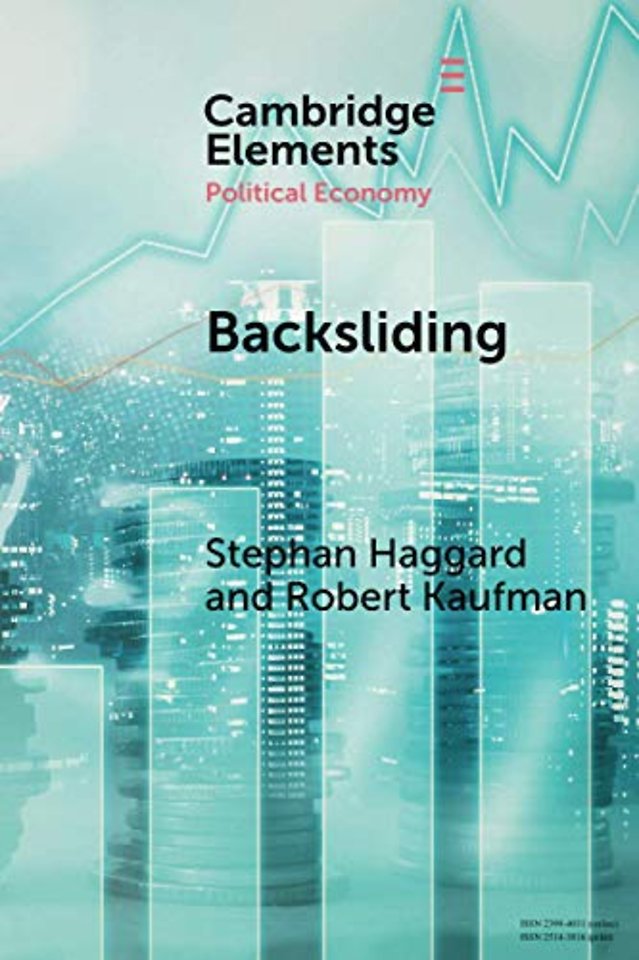
Backsliding
Democratic Regress in the Contemporary World
Samenvatting
Assaults on democracy are increasingly coming from the actions of duly elected governments, rather than coups. Backsliding examines the processes through which elected rulers weaken checks on executive power, curtail political and civil liberties, and undermine the integrity of the electoral system. Drawing on detailed case studies, including the United States and countries in Latin America, Eastern Europe, and Africa, the book focuses on three, inter-related causal mechanisms: the pernicious effects of polarization; realignments of party systems that enable elected autocrats to gain legislative power; and the incremental nature of derogations, which divides oppositions and keeps them off balance. A concluding chapter looks at the international context of backsliding and the role of new technologies in these processes. An online appendix provides detailed accounts of backsliding in 16 countries, which can be found at www.cambridge.org/backsliding.
Specificaties
Inhoudsopgave
Net verschenen
Rubrieken
- aanbestedingsrecht
- aansprakelijkheids- en verzekeringsrecht
- accountancy
- algemeen juridisch
- arbeidsrecht
- bank- en effectenrecht
- bestuursrecht
- bouwrecht
- burgerlijk recht en procesrecht
- europees-internationaal recht
- fiscaal recht
- gezondheidsrecht
- insolventierecht
- intellectuele eigendom en ict-recht
- management
- mens en maatschappij
- milieu- en omgevingsrecht
- notarieel recht
- ondernemingsrecht
- pensioenrecht
- personen- en familierecht
- sociale zekerheidsrecht
- staatsrecht
- strafrecht en criminologie
- vastgoed- en huurrecht
- vreemdelingenrecht