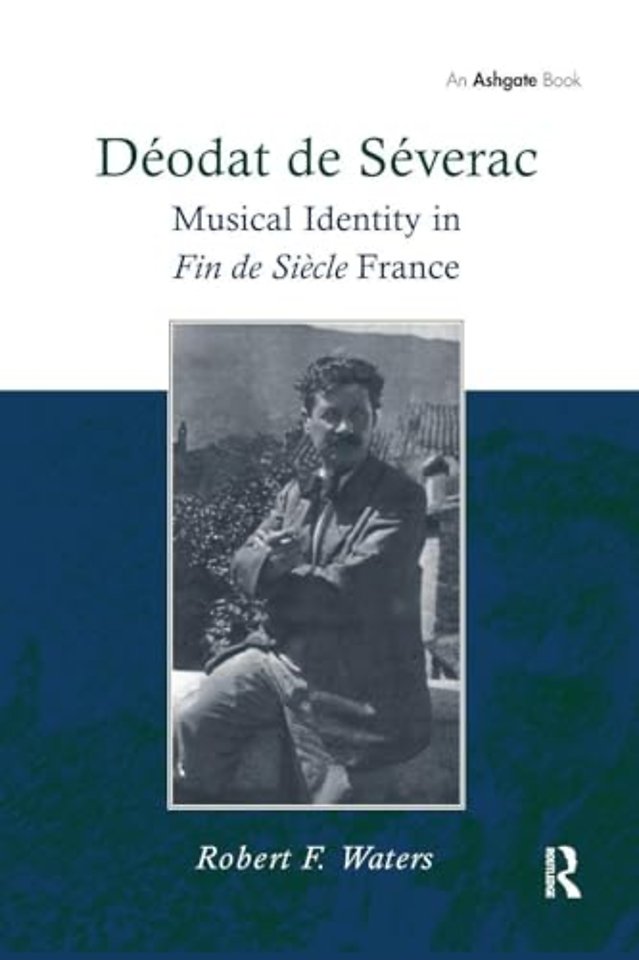
Déodat de Séverac
Musical Identity in Fin de Siècle France
Samenvatting
Déodat de Séverac (1872-1921) is best known for his piano music but his compositions included orchestral and vocal works, including opera, cantata and incidental music. Claude Debussy described Séverac's music as "exquisite and rich with ideas." The early works were influenced by Impressionist harmonies, church modes, cyclic techniques, folk-like melodies and Andalusian motives. Séverac's style changed dramatically in 1907 when he left Paris and began to include Catalan elements in his compositions - a transition that has hitherto gone unrecognized. Robert Waters provides a much-needed study of the life and works of Séverac, focusing on the composer's regionalist philosophy. Séverac's engagement with folk music was not a patriotic gesture in the vein of nationalistic composers, but a way of expressing regional identity within France to counter the restrictive styles sanctioned by the Paris Conservatory. His musical philosophy mirrored larger social and political debates regarding anti-centralist positions on education, politics, art and culture in fin de siècle France. Such debates involved political and social leaders whom Séverac knew and personally admired, including the writer Maurice Barrès and the poet Frédéric Mistral. The book will appeal to those specializing in French music, European ethnic musics, piano music and French music history.
Specificaties
Net verschenen
Rubrieken
- aanbestedingsrecht
- aansprakelijkheids- en verzekeringsrecht
- accountancy
- algemeen juridisch
- arbeidsrecht
- bank- en effectenrecht
- bestuursrecht
- bouwrecht
- burgerlijk recht en procesrecht
- europees-internationaal recht
- fiscaal recht
- gezondheidsrecht
- insolventierecht
- intellectuele eigendom en ict-recht
- management
- mens en maatschappij
- milieu- en omgevingsrecht
- notarieel recht
- ondernemingsrecht
- pensioenrecht
- personen- en familierecht
- sociale zekerheidsrecht
- staatsrecht
- strafrecht en criminologie
- vastgoed- en huurrecht
- vreemdelingenrecht