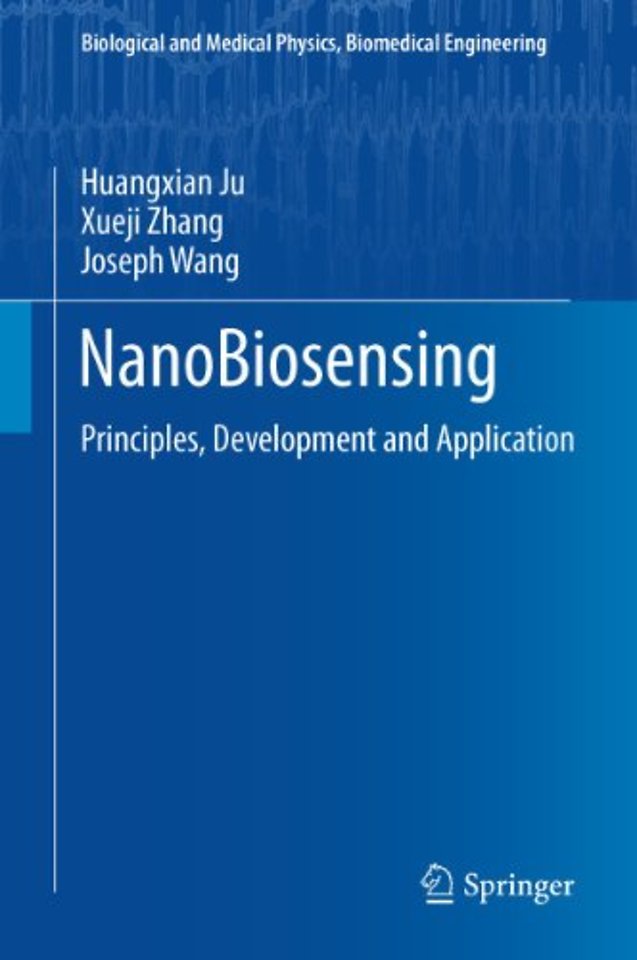
NanoBiosensing
Principles, Development and Application
Samenvatting
This book will cover the full scope of nanobiosensing, which combines the newest research results in the cross-disciplines of chemistry, biology, and materials science with biosensing and bioanalysis to develop novel detection principles, sensing mechanisms, and device engineering methods. It not only covers the important types of nanomaterials for biosensing applications, including carbon nanotubes, carbon nanofiber, quantum dots, fullerenes, fluorescent and biological molecules, etc., but also illustrates a wide range of sensing principles, including electrochemical detection, fluorescence, chemiluminesence, antibody-antigen interactions, and magnetic detection.
The book details novel developments in the methodology and devices of biosensing and bioanalysis combined with nanoscience and nanotechnology, as well as their applications in biomedicine and environmental monitoring. Furthermore, the reported works on the application and biofunction of nanoparticles have attracted extensive attention and interest, thus they are of particular interest to readers.
The reader will obtain a rich survey of nanobiosensing technology, including the principles and application of biosensing, the design and biofunctionalization of bionanomaterials, as well as the methodology to develop biosensing devices and bioanalytical systems.
Specificaties
Inhoudsopgave
Net verschenen
Rubrieken
- aanbestedingsrecht
- aansprakelijkheids- en verzekeringsrecht
- accountancy
- algemeen juridisch
- arbeidsrecht
- bank- en effectenrecht
- bestuursrecht
- bouwrecht
- burgerlijk recht en procesrecht
- europees-internationaal recht
- fiscaal recht
- gezondheidsrecht
- insolventierecht
- intellectuele eigendom en ict-recht
- management
- mens en maatschappij
- milieu- en omgevingsrecht
- notarieel recht
- ondernemingsrecht
- pensioenrecht
- personen- en familierecht
- sociale zekerheidsrecht
- staatsrecht
- strafrecht en criminologie
- vastgoed- en huurrecht
- vreemdelingenrecht