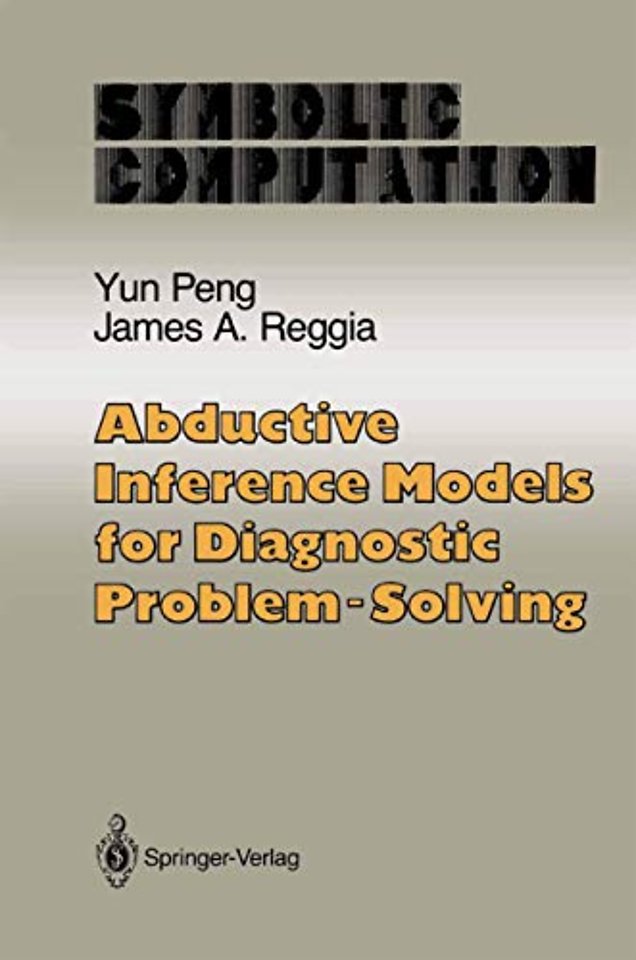
Abductive Inference Models for Diagnostic Problem-Solving
Samenvatting
Making a diagnosis when something goes wrong with a natural or m- made system can be difficult. In many fields, such as medicine or electr- ics, a long training period and apprenticeship are required to become a skilled diagnostician. During this time a novice diagnostician is asked to assimilate a large amount of knowledge about the class of systems to be diagnosed. In contrast, the novice is not really taught how to reason with this knowledge in arriving at a conclusion or a diagnosis, except perhaps implicitly through ease examples. This would seem to indicate that many of the essential aspects of diagnostic reasoning are a type of intuiti- based, common sense reasoning. More precisely, diagnostic reasoning can be classified as a type of inf- ence known as abductive reasoning or abduction. Abduction is defined to be a process of generating a plausible explanation for a given set of obs- vations or facts. Although mentioned in Aristotle's work, the study of f- mal aspects of abduction did not really start until about a century ago.
Specificaties
Inhoudsopgave
Net verschenen
Rubrieken
- aanbestedingsrecht
- aansprakelijkheids- en verzekeringsrecht
- accountancy
- algemeen juridisch
- arbeidsrecht
- bank- en effectenrecht
- bestuursrecht
- bouwrecht
- burgerlijk recht en procesrecht
- europees-internationaal recht
- fiscaal recht
- gezondheidsrecht
- insolventierecht
- intellectuele eigendom en ict-recht
- management
- mens en maatschappij
- milieu- en omgevingsrecht
- notarieel recht
- ondernemingsrecht
- pensioenrecht
- personen- en familierecht
- sociale zekerheidsrecht
- staatsrecht
- strafrecht en criminologie
- vastgoed- en huurrecht
- vreemdelingenrecht